Alba Vergés, former Catalan Health Minister, rejects claims she blocked Covid vaccinations for National Police and Guardia Civil. Prosecutors seek a 12-year ban, alleging discrimination in the vaccine rollout.
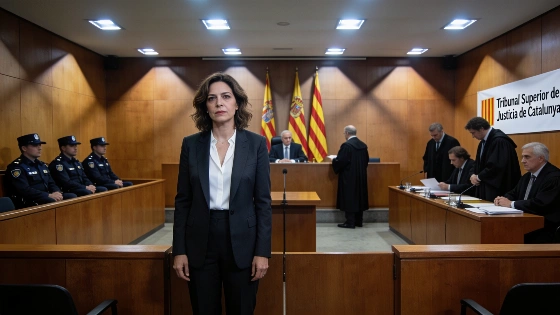
Alba Vergés, who led Catalonia's Health Department during the pandemic, firmly denied in court that she ever ordered a stop to Covid-19 vaccinations for National Police and Guardia Civil officers in the region. Facing accusations of discrimination, Vergés insisted that all decisions followed national guidelines and that her team aimed to vaccinate all essential workers as quickly as possible.
The trial, held at the Barcelona Audiencia, centers on whether the Catalan health authorities unfairly delayed immunization for state security forces compared to other essential groups. Prosecutors are seeking a 12-year disqualification from public office for Vergés and three other senior officials, arguing that the delay amounted to unequal treatment of National Police and Guardia Civil personnel.
During her testimony, Vergés responded to all parties except the police unions and Guardia Civil associations acting as private prosecutors. She stressed that no directive was ever given to halt vaccinations for these groups. According to her, the intention was always to include all essential workers, including police, firefighters, and teachers, in the campaign as soon as possible.
Vergés described the early days of the vaccine rollout as a period of hope after months of daily briefings on deaths and ICU admissions. She explained that the initial strategy, set by the Consejo Interterritorial in December 2020, prioritized the elderly, with Pfizer and Moderna doses first going to those over 80. Essential workers, including security forces, were added to the priority list in February 2021 when AstraZeneca became available for people aged 18 to 55.
The rollout's pace varied among groups. Mossos d'Esquadra, local police, and firefighters received vaccines sooner because they submitted their personnel lists more quickly. National Police and Guardia Civil requested to be vaccinated at their own stations, which the Generalitat arranged promptly. However, the process was interrupted on March 15, 2021, when the Ministry of Health paused AstraZeneca vaccinations nationwide due to reports of side effects.
After a week-long suspension, the Consejo Interterritorial agreed on March 22 to resume AstraZeneca shots, but with a renewed focus on those aged 55 to 65, as age was seen as the main risk factor for severe Covid outcomes. Vergés communicated this change to her department, emphasizing the need to balance age-based prioritization with continued vaccination of essential workers, including state security forces.
At that point, Catalonia had around 100,000 AstraZeneca doses for a population of one million people aged 55 to 65. The shortage meant that older age groups were prioritized, and appointments for younger essential workers—including police, firefighters, and teachers—were postponed until more doses became available. The ban on using AstraZeneca for those under 60, introduced on April 7, further delayed vaccinations for younger officers, who in some cases waited until June or July for their shots.
Vergés maintained that neither the Consejo Interterritorial nor the Catalan authorities ever intended to exclude National Police or Guardia Civil from the vaccination campaign. She argued that the delays were a result of national policy changes and vaccine supply constraints, not discrimination. This case echoes other recent legal disputes involving police officials, such as the ongoing investigation into a former National Police deputy director, which has also drawn public attention to the intersection of law enforcement and judicial proceedings. For example, a recent case involving a former police official seeking dismissal of a sexual assault case highlights the broader scrutiny facing Spain's security institutions.
Spain's Covid-19 vaccination campaign was coordinated at the national level, with the Consejo Interterritorial setting priorities and distributing doses to the autonomous communities. The initial focus on the elderly reflected the high mortality rates among older adults, while the inclusion of essential workers aimed to protect those at greater risk of exposure. Disputes over the pace and order of vaccinations were not unique to Catalonia, as several regions faced logistical challenges and shifting guidelines. The outcome of the Barcelona trial may set a precedent for how regional authorities are held accountable for pandemic-era decisions, especially when national and local priorities collide.