Barcelona’s Clínic Hospital will relocate, triggering a €1.7 billion urban overhaul. L’Hospitalet will see 800 new homes, half protected. Esplugues secures the new Pharmacy faculty. The project reshapes healthcare, housing, and city links.
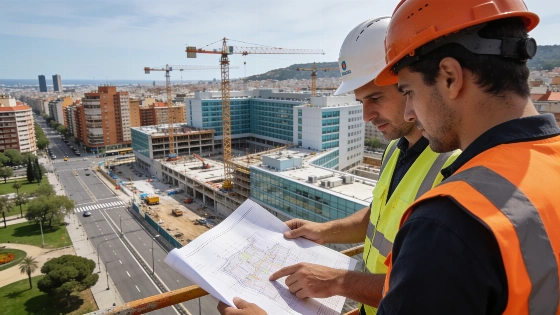
The relocation of Barcelona’s Clínic Hospital is set to reshape the city’s western edge, launching a €1.7 billion redevelopment across 70 hectares that span Barcelona, Esplugues, and L’Hospitalet. The plan, approved by the Consorcio Porta Diagonal-Campus Clínic, includes up to 1,125 new homes—most of them in L’Hospitalet, with half reserved as protected housing. Esplugues will become home to the new Faculty of Pharmacy and Food Sciences.
According to the project breakdown, 63% of the new development will go to healthcare, education, and research; 23% to economic activity; 10% to housing; and 4% to local facilities. The main hospital campus will cover nearly 400,000 square meters, with another 120,000 set aside for uses like residences for researchers and medical staff. Housing will take up to 90,000 square meters, with about 800 units in L’Hospitalet and the rest in Barcelona.
The Generalitat of Catalonia has approved a direct subsidy of up to €17.5 million to support the construction of the new Pharmacy faculty in Esplugues.
For L’Hospitalet, the Clínic’s arrival means more than a new hospital. The city will gain a second university hospital, serving densely populated neighborhoods like La Florida. The project also brings a new park near Collblanc road, an extension of the Finestrelles promenade toward Collserola, and a larger Can Rigal park. Mayor David Quirós called the increase in protected housing “historic,” noting that the share has doubled from earlier plans. He stressed that local residents should see direct benefits from hosting such a major facility.
Esplugues will host the new Faculty of Pharmacy and Food Sciences of the Universitat de Barcelona, replacing facilities from the 1950s. The new site on Sant Mateu street will connect with the Clínic-UB Health Campus, the Faculty of Medicine, the Barcelona Science Park, and hospitals like Sant Joan de Déu. The move will increase the faculty’s capacity by 30%, up to 3,000 students. Funding will partly come from the Generalitat’s purchase of university sports land, with a budget of €152 million.
According to official planning documents, the preliminary version of the urban development plan (PDU) was approved by the general council of the Porta Diagonal – Campus Clínic consortium, setting a timeline for public procedures through December, with preliminary approval expected in the first half of 2027 and final approval in early 2028.
Transport will also see major changes. The L3 metro line will extend past Zona Universitaria, adding two new stations: one at the new Clínic and another in central Esplugues. This is meant to break up the current barrier between Diagonal and Ronda de Dalt, reconnecting city zones and improving access for residents and students.
Officials from all three cities have described the project as a rare opportunity. The Generalitat sees the Clínic’s move as a driver for innovation and urban cohesion, while the rector of the Universitat de Barcelona pointed to the strategic value of bringing pharmacy education into the metropolitan health cluster. The new campus is expected to open by 2035, but the size and complexity of the project make the timeline ambitious.
Like other large urban projects in the region, such as the redevelopment of Tres Chimeneas, the Clínic plan will require moving and burying existing electrical infrastructure. Housing will be integrated into the hospital campus to keep the area active beyond working hours, not just as an institutional zone. This approach responds to concerns seen in other city projects, including the recent closure of the García Márquez Library during staff strikes, where the balance between public service and local benefit was questioned.
This project stands out for the alignment between municipal and regional interests. L’Hospitalet gains affordable housing and better healthcare, Esplugues strengthens its role as a university center, and Barcelona reconnects neighborhoods long divided by major roads. The scale of public investment and the focus on integrated urban life set a new standard for metropolitan planning in Catalonia.