Spain and Morocco are reinforcing the borders of Ceuta and Melilla ahead of Wednesday. It is the sixth alert since July and has brought extra police units to both cities.
Spain and Morocco are preparing for a possible mass attempt to cross into Ceuta and Melilla this Wednesday. It would be the sixth such alert since July. Both countries have reinforced their border deployments. The expected movement coincides with Morocco's legislative elections.
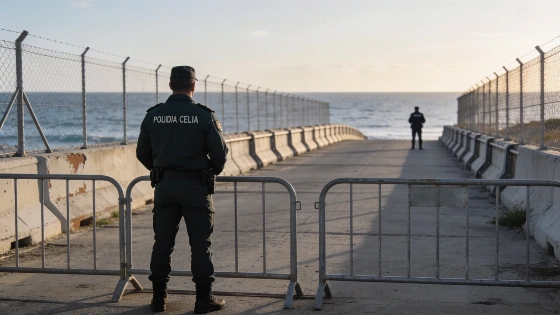
The Spanish response will be largest in Ceuta. Around 150 additional officers will join the existing deployment between Tuesday and Wednesday. The Guardia Civil will also increase its coverage by suspending rest days and leave arrangements.
Reuters, as cited in Spanish-language reports, said Moroccan authorities detained at least 111 people who were heading towards Ceuta after online calls for a collective crossing.
From Tuesday night until 4 p.m. Wednesday, three Guardia Civil Reserve and Security Groups platoons will operate at the border. The unit adds about 60 personnel. That will bring the force to 120 officers during night hours and 90 during the day. Interior Ministry sources say the figures could rise if the alert turns into a real threat.
The Guardia Civil has 706 officers serving in Ceuta, including 195 sent after the July crossing. It will also double the use of helicopters and drones during daylight and at night. The Policía Nacional is sending two additional riot-police groups with 75 officers in total. One unit scheduled to leave will remain until at least Wednesday afternoon.
Spain’s Foreign Ministry in Rabat has stressed that an irregular entry through Ceuta or Melilla does not provide a right to travel to mainland Spain, settle there or move freely within the European Union. The message formed part of a public deterrence campaign on social media ahead of the expected date.
Morocco has already set up a large security cordon around the approaches. Metal barriers extend roughly ten metres into the sea. Concertina wire, police checks and Gendarmerie patrols cover roads leading towards the crossing points. Some sources estimate the Moroccan deployment at close to 3,000 personnel, including military units.
The alert follows calls circulated through social networks and messaging channels for collective attempts on 8, 9, 12 and 15 August and on 20 September. The first three warnings had not previously been made public. None produced significant border movements. The most serious episode came on 15 August, when hundreds of migrants, most of them from sub-Saharan Africa, tried to reach the fenced area. Moroccan forces stopped them in what was described as an unprecedented operation.
Melilla will receive a smaller reinforcement. The Guardia Civil will keep a helicopter on permanent duty, add three GRS platoons numbering about 60 officers and deploy a maritime patrol vessel. The city's underwater activities unit will also be strengthened. The Policía Nacional does not currently plan to add officers to its Melilla deployment. It already includes 60 UIP personnel sent at the beginning of August.
Spanish Interior Minister Fernando Grande-Marlaska confirmed the preventive reinforcement of both cities in response to the online calls linked to 23 September. The authorities have also used social media to discourage further irregular crossings. RTVE reported that, as of 20 September, the Interior Ministry had no confirmation of a new mass entry despite the warnings circulating online.
The chain of alerts began after nearly 80,000 people crossed by swimming from Morocco into Ceuta on 30 and 31 July, according to the Interior Ministry account cited in an earlier report. That episode led to additional Guardia Civil personnel in Ceuta. It remains the operational reference for the current preparations.
The forces now being sent to the border point to a preventive response, not a confirmed new entry attempt. That distinction matters. Dates circulated online have repeatedly triggered deployments without producing a major crossing. The scale of the Spanish and Moroccan measures still shows that authorities see the risk as concrete enough to require immediate manpower, air surveillance and maritime support.
For residents and public services in both autonomous cities, the practical effect is a heavily reinforced border during the election period. The response matches the warnings and draws on the July experience. It also shows the weakness of relying on repeated emergency deployments. Until the alerts stop turning into operational crises, the border will remain managed through escalation rather than stability.