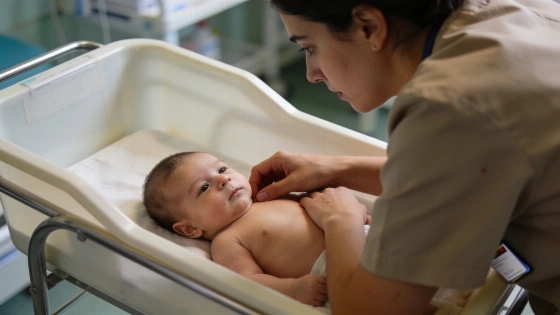
Covid cases among Spanish infants nearly doubled in one week. RSV is also rising, though hospital admissions remain low, while a mutation that evaded antibody protection has raised concern.
Covid incidence among babies under one nearly doubled in a single week in Spain. The rate reached 225.5 cases per 100,000 inhabitants between 14 and 20 September, up from 123.6 the week before. The same report shows a sharp rise in respiratory syncytial virus cases among young children. It also identifies three babies infected with a mutation that evaded antibodies used since 2023.
The figures come from the latest weekly respiratory infection report by the Instituto de Salud Carlos III (ISCIII). The national rate for respiratory infections rose from 270 to 370 cases per 100,000 inhabitants. It is still below the epidemic threshold, but is nearing the low epidemic level set at 400 cases per 100,000.
По данным системы SiVIRA/ISCIII, за неделю 7–13 сентября позитивность тестов на Covid в первичной медпомощи выросла до 16,7%, а показатель синдромальных случаев достиг 11,3 на 100 000 жителей.
Covid is driving the increase most clearly. Among children aged one to four, the rate nearly doubled from 20.4 to 39.3 cases per 100,000. It also rose among people aged 80 and over, from 18.1 to 30.9, and among those aged 70 to 79, from 14.7 to 30.2.
The increase is not limited to the youngest and oldest groups.
Covid incidence rose in every age bracket. The overall rate went from 11.4 to 20.8 cases per 100,000 inhabitants. Among adults aged 20 to 59, it rose from 9.8 to 17.8. The rate among people aged 60 to 69 increased from 13.1 to 17.6. Children aged five to 19 had the lowest incidence, but their rate still rose from 4.1 to 11.8 cases per 100,000.
Рост RSV в Испании пока рассматривается прежде всего в контексте сезонной защиты младенцев, а не как признак массовой циркуляции вируса. RTVE сообщало, что в ряде регионов кампании профилактики на сезон 2026–2027 начали запускать заранее; в Андалусии защита детей младше шести месяцев стартовала 21 сентября 2026 года.
The data also challenge the idea that coronavirus activity is limited to winter. The latest increase came in September, after the summer holiday period. SARS-CoV-2 again affected babies and older people most strongly. The national positivity rate for the virus rose to 24.1% from 18.9% a week earlier. SiVIRA/ISCIII surveillance reports are the main official source for comparing weekly trends in Covid, influenza and RSV across age groups.
Influenza moved in the opposite direction. Its positivity rate fell from 10.6% to 7.8%. The rate of flu-like illness rose from 10.4 to 13.9 cases per 100,000, but stayed below the epidemic threshold. The symptoms reported most often were cough, fever, general discomfort and nasal congestion.
RSV is the other main concern for children. Among those under five, the rate rose from 56.4 to 103 cases per 100,000 in one week. It is still below the levels recorded in previous seasons. The most common symptoms were cough, nasal congestion, fever and general discomfort.
RSV is a leading cause of respiratory infection in childhood and affects babies under one especially strongly. In severe cases, it can cause bronchiolitis and other respiratory problems that require hospital care. The ISCIII identified three babies infected with a mutation that escaped the protection provided by antibodies administered since 2023. Two of them required admission.
Hospital figures remain relatively low. The overall hospitalisation rate for respiratory infections was 8.7 cases per 100,000 inhabitants, compared with 8.6 the previous week. Hospital positivity for flu rose from 7.7% to 11.3%. Covid positivity in hospitals fell from 15.5% to 13.8%. No hospitalisation linked to RSV was recorded.
The figures do not point to a broad hospital crisis. They do show where monitoring is needed. Infants are recording the fastest Covid increase, while RSV is also rising. Community transmission is increasing, and a reported mutation has evaded antibody protection. That leaves the youngest children as the most exposed group in this report.
The message is clear but not alarmist. Respiratory infections in Spain remain below epidemic thresholds. Covid can still produce a strong September wave, and the rise among babies needs close attention.