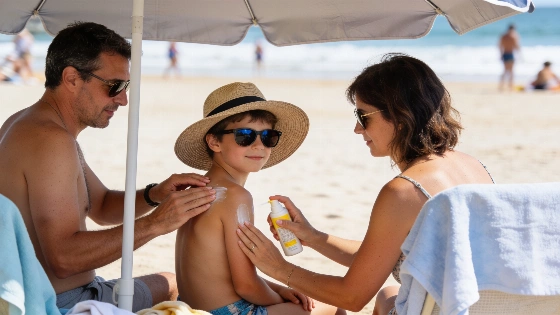
Relying on high-SPF creams or tanning supplements can give a false sense of security. According to dermatologist Jorge Soto, true protection against UV radiation begins with physical barriers like clothing and shade, not just sunscreen or oral products.
When temperatures soar and beaches fill up, many reach for SPF 50 creams or trendy tanning gummies, hoping for safe sun exposure. But dermatologist Jorge Soto from Policlínica Gipuzkoa cautions that neither high-number sunscreens nor oral supplements can replace the basics: covering up and seeking shade.
Soto, echoing World Health Organization guidance, stresses that the first and most effective line of defense against ultraviolet radiation is not a bottle of sunscreen, no matter how high the SPF. Instead, he points to practical measures—wearing tightly woven clothing, wide-brimmed hats, and sunglasses, and avoiding direct sun during peak hours. Sunscreen remains essential for exposed skin, but it is only one part of a broader strategy.
SPF Numbers: Limited Protection
Many believe that SPF 50 allows for longer, safer sunbathing. In reality, the difference between SPF 30 and SPF 50 is smaller than most assume: SPF 30 blocks about 97% of UVB rays, while SPF 50 offers only slightly more. No sunscreen blocks 100% of harmful rays, and higher numbers do not extend safe exposure time. The U.S. Food and Drug Administration clarifies that SPF is not a timer; effectiveness depends on proper application, skin type, time of day, and environmental factors like water or sweat.
Experts recommend using a broad-spectrum sunscreen (protecting against both UVA and UVB), water-resistant, and with SPF 30 or higher. It should be applied generously to all exposed areas and reapplied every two hours, or after swimming, sweating, or towel drying. Crucially, sunscreen does not replace the need for shade, protective clothing, or hats.
Tanning Gummies: No Real Barrier
Supplements marketed as tanning gummies, pearls, or capsules have gained popularity, promising a golden glow and added protection. Soto warns that while some ingredients may darken skin tone or add pigments, this cosmetic change does not equate to real UV protection or prevent cellular damage from sun exposure. Oral photoprotective supplements may offer minor benefits, but they are only a complement—not a substitute—for physical barriers and topical sunscreen.
He also notes that supplement safety and efficacy vary widely. People taking medication, those who are pregnant, or anyone with health conditions should consult a healthcare professional before using such products. A darker tan is not proof of safety in the sun.
Tanorexia: When Tanning Becomes Compulsive
The term 'tanorexia' describes a compulsive drive for tanning, even after burns or medical warnings. Soto links this behavior to the release of endorphins, which can create a sense of well-being and, in some cases, lead to addiction-like patterns. Experimental studies in animals suggest repeated UV exposure can trigger dependency symptoms, but this does not mean every desire for a tan is pathological. Only healthcare professionals can assess when tanning habits become a health concern.
Children: Highest Risk, Strongest Precautions
Children are especially vulnerable to UV damage. The World Health Organization highlights that sunburns in childhood significantly increase the risk of melanoma later in life. In Spain, midday UV index values often reach 9–11, and even higher in the Canary Islands, making sun protection for children a top priority.
Key recommendations include checking the UV index, avoiding sun during peak hours, seeking shade, dressing children in tightly woven clothing and hats, using broad-spectrum SPF 30+ sunscreen on exposed skin, and reapplying it every two hours or after swimming. Babies should be kept out of direct sunlight, and pediatric advice should be followed regarding sunscreen use.
As Soto emphasizes, sunscreen is a necessary layer of protection, but it does not make prolonged sun exposure safe. The most effective approach combines limiting time in direct sunlight, covering up, and using shade whenever possible.