Alberto Núñez Feijóo calls for the CNI director to appear in the Senate. The PP will join the legal case on Ceuta’s migration crisis. The party accuses the government of contradictions and delayed response.
The political standoff over Spain’s handling of the Ceuta migration crisis has intensified, as Alberto Núñez Feijóo announced that the Partido Popular (PP) will formally request the director of the Centro Nacional de Inteligencia (CNI), Esperanza Casteleiro, to testify in the Senate. The move comes amid growing disputes within the government about what information was available before the mass entry of migrants from Morocco and who was responsible for the delayed response.
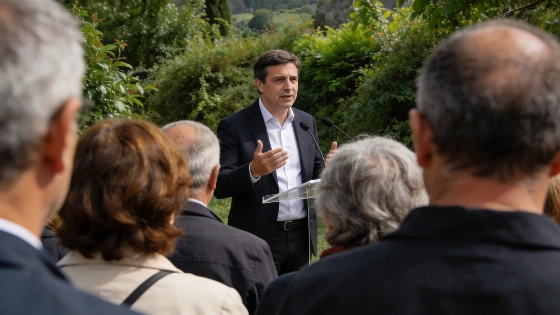
Feijóo, speaking at the PP’s annual political gathering in Pontevedra, sharply criticized the government’s management of the situation in Ceuta. He pointed to conflicting statements from the Ministry of Defence and other officials regarding whether intelligence services had properly warned the authorities. According to Feijóo, these contradictions suggest that “someone is not telling the truth,” and he insisted that the public deserves full transparency about the events leading up to the border incident.
The PP’s strategy is twofold: demanding a public explanation from the CNI’s leadership and joining the ongoing legal proceedings in the Audiencia Nacional. Feijóo argued that the scale of the crisis represents a major challenge to Spanish sovereignty and cannot go unanswered. He accused the government of abandoning Ceuta during a critical period, highlighting that key decisions—such as declaring a national interest situation and requesting Frontex support—were made only after significant delays.
In his remarks, Feijóo also defended the actions of the police and military deployed in Ceuta, stating that they fulfilled their duties despite lacking adequate resources and legal backing. He was particularly critical of the conditions faced by the Spanish Army, describing the withdrawal of troops due to insufficient means as unacceptable. The PP leader emphasized that Ceuta and Melilla must not be treated as “second-class territories” and reaffirmed their status as integral parts of Spain.
Feijóo announced plans to visit Ceuta on September 2, representing the PP, and called for public demonstrations in support of the city’s residents. He pledged that the party would not abandon Ceuta, underlining the need for solidarity and accountability.
The escalation comes as Spain faces broader political uncertainty, with upcoming municipal and regional elections and the possibility of general elections on the horizon. Feijóo framed the Ceuta crisis as symptomatic of deeper governmental dysfunction, citing issues such as parliamentary gridlock, lack of new budgets, and what he described as widespread corruption. He also criticized the government’s coalition partners for their role in sustaining the current administration.
Recent tensions between Spain and other EU countries over border controls have further complicated the situation. For example, Italy’s criticism of Spain’s border management and reciprocal checks has drawn attention to the wider European context, as detailed in a recent report on the Schengen dispute. These developments underscore the ongoing challenges facing Spain’s border policy and the political stakes involved.
Ceuta’s unique position as a Spanish enclave bordering Morocco has long made it a focal point for migration and diplomatic tensions. The latest crisis has reignited debates over national security, the adequacy of government response, and the need for clear protocols in managing sudden influxes at the border. As legal proceedings advance and political pressure mounts, the outcome may set important precedents for how Spain addresses similar incidents in the future.