Alberto Núñez Feijoo has pledged an integrated strategy for Ceuta and Melilla, including weekly Cabinet attention for both cities. Support from Brussels gives the proposal a broader European framework.
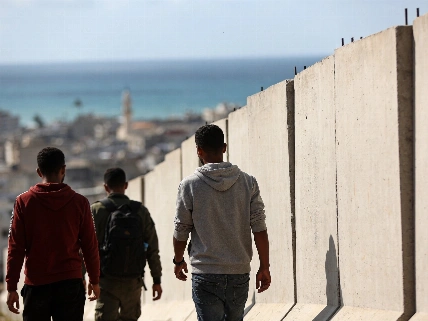
Alberto Núñez Feijoo wants Ceuta and Melilla to become a standing item on the agenda of a future Spanish Cabinet if the PP forms a government in 2027. The opposition leader presented his integrated plan during a visit to Melilla with regional president Juan José Imbroda. Its central argument is that the two autonomous cities are Spanish territory and part of Europe’s southern border.
17 сентября 2026 года Европейский парламент принял резолюцию по Ceuta 339 голосами против 225 при 16 воздержавшихся. Документ выразил полную поддержку жителям Ceuta и Melilla и призвал усилить защиту внешних границ ЕС.
Brussels has given the PP leader the framing he was seeking. Feijoo said the European Union’s support for treating Ceuta and Melilla as a border issue affecting the bloc strengthens Spain’s position. His formulation was blunt: “Europeizando esta situación somos más y tenemos más fuerza”. The European Parliament’s resolution of 17 September 2026 called for stronger protection of the EU’s external borders and explicitly included the two cities in that discussion.
The plan has five priorities. The first is sovereignty, which Feijoo said cannot be “subarrendada” to the neighbouring country. The second would require foreign-policy decisions handled by the Government to pass through Congress. The third focuses on border security that is serious, recognised and respected by both countries sharing the frontier.
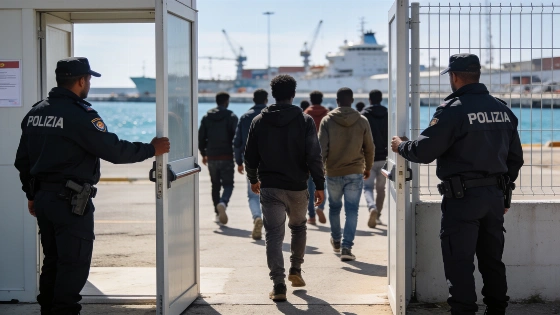
Reuters reported that more than 72,000 people crossed into Ceuta from Morocco at the end of July 2026, although most later left the enclave. Spanish estimates put the number remaining in the region at about 12,000, including minors, while Ceuta’s local authorities cited a figure closer to 13,000.
The European Parliament’s official description also highlights the territories’ special legal position: Ceuta and Melilla have a unique regime under the Schengen rules, and illegal entries into them do not constitute entry into the rest of the Schengen area. That distinction gives Feijoo’s call for a stronger European role a specific regulatory and border-management context, rather than leaving it as a question of national sovereignty alone.
Feijoo also listed measures with a direct economic and operational focus: lower Social Security contributions, a reduction in Corporation Tax, stronger investment in public services and improved air links with Melilla. He did not provide figures for the proposed reductions or investment. EFE reported that he also promised to defend the “Spanishness” of Ceuta and Melilla and announced separate security and economic plans for the two autonomous cities.
The announcement fits the PP’s wider effort to make border management a central test of the national government. The party leader’s positioning comes alongside recent Madrid scrutiny of senior political figures and places Ceuta and Melilla at the centre of his national opposition strategy. The PP has also promoted the issue in Brussels, presenting the crisis as a matter of protecting the EU’s external border.
For the cities, the practical promise is greater political attention if the PP takes office. Feijoo says their affairs would be discussed weekly by his future Cabinet instead of being treated as a peripheral regional issue. That agenda would bring sovereignty, migration, security, European policy, public services and transport under one government framework.
The scale and aftermath of the migration crisis remain contested. Spain’s migration minister Ángel Víctor Torres said that 5,321 people had voluntarily returned from Ceuta to Morocco since 10 August 2026, while another 90 had withdrawn applications for international protection. The differing estimates from Madrid and the local authorities show why the PP’s proposed framework would require clear definitions, resources and coordination between Spain, the EU and Morocco.
Feijoo’s plan matters less as a completed measure than as an electoral blueprint. Its strongest feature is the attempt to combine Spanish authority with European responsibility while attaching concrete proposals on taxes, services and connectivity. Until the PP presents the full programme, however, the five-point framework remains a promise whose value will depend on the detail and resources eventually placed behind it.