The largest wildfire in Spain’s history has devastated 50,000 hectares in Ávila. Firefighters describe chaotic conditions and urge urgent improvements to response systems. Exhaustion and lack of coordination complicate efforts.
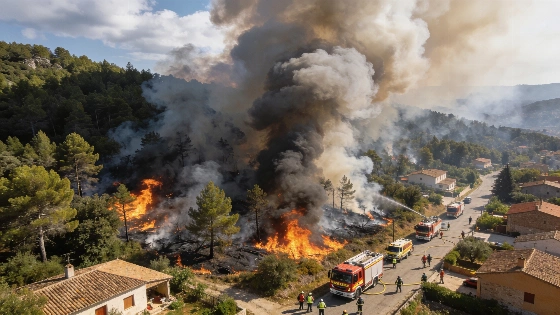
The wildfire raging across southern Ávila has become the largest and most complex in Spain’s recorded history, consuming 50,000 hectares and pushing emergency services to their limits. Firefighters from across the country have described the event as unlike anything they have faced in decades of service, citing unpredictable winds, rapidly shifting fronts, and overwhelming fuel loads in unmanaged forests. Despite days of relentless effort, the fire remains active in several areas, with new flare-ups threatening to undo hard-won progress.
Teams from Ávila, supported by reinforcements from the Ministry for the Ecological Transition and the Demographic Challenge (Miteco), as well as brigades from Soria, Cuenca, Madrid, La Palma, and other regions, have worked side by side. The operation has brought together a patchwork of uniforms, vehicles, and accents, but also revealed moments of confusion and lack of coordination. In Casavieja, one of the most critical hotspots, miscommunication led to firefighters being redirected between groups, while some urban crews withdrew, leaving vulnerable flanks exposed to advancing flames.
Veteran firefighters, including those who previously battled the devastating Sierra de la Culebra fires in Zamora and major blazes in León and Zamora in 2025, have described the Ávila wildfire as “total chaos.” Several teams were forced to retreat multiple times as fire tongues cut across key roads, and many reported working through nights of intense heat and wind, managing to save some areas but unable to rest easy. The physical toll has been severe, with exhaustion setting in after days of continuous action, and the psychological strain of feeling ineffective against such a powerful force weighing heavily on crews.
Concerns have also been raised about the high turnover and temporary contracts common in Castilla y León, which contribute to a lack of experience and training among some personnel. Reports from the field noted instances of underprepared workers engaging in direct attacks on the fire without essential protective gear, highlighting the urgent need for better training and working conditions.
Despite the relentless pace, moments of camaraderie and dark humor have surfaced. In El Tiemblo, a brigade resting after their shift joked about the “norwhisky” wind, a play on the northwest wind’s English abbreviation. In Cebreros, another town hit hard by the flames, a technical lead expressed surprise that, given the scale of the disaster, there had been few serious injuries. He recalled surreal moments when fire fronts overtook teams in the Iruelas valley, something he had never experienced in over a decade of service.
Local volunteers have played a crucial role, especially in challenging areas between Burgohondo and Mijares, where around 50 residents equipped with walkie-talkies and supported by Civil Protection joined the effort. While their help was welcomed, professionals stressed the need for better organization and training in rural communities to ensure safety and effective coordination, particularly when counterfires are set or when unprepared individuals approach dangerous zones.
As the fire’s intensity finally begins to wane, firefighters gather for brief moments of rest, sharing meals and reflecting on the ordeal. Many express hope that the scale of this disaster will prompt national authorities to rethink prevention, response, and recognition for those on the front lines. The exhaustion is palpable, but so is the determination to return to duty as soon as possible, with some already preparing for the next shift.
This wildfire follows a series of severe incidents in central Spain in recent years. For example, a major blaze near Burgohondo previously forced the evacuation of over 30,000 people in Ávila, as detailed in this report on mass evacuations and emergency response. The current crisis underscores the growing challenges posed by extreme weather and the urgent need for systemic improvements in Spain’s wildfire management.
Spain’s wildfire season has grown longer and more intense, with climate conditions such as prolonged drought and heatwaves increasing the risk of large-scale fires. The country’s diverse geography, from mountainous forests to dry plains, complicates firefighting efforts and demands robust coordination between regional and national agencies. In recent years, authorities have invested in aerial resources and early warning systems, but the Ávila fire demonstrates that gaps remain, particularly in workforce stability and local preparedness. As the region recovers, attention is likely to focus on both immediate recovery and long-term reforms to prevent future disasters of this magnitude.