Travelers with dogs in Spain should look for a specific sign at hotel entrances. A recent law lets hotels choose whether to accept pets, but obliges them to visibly warn guests if animals are not allowed. Here’s what you need to know before booking.
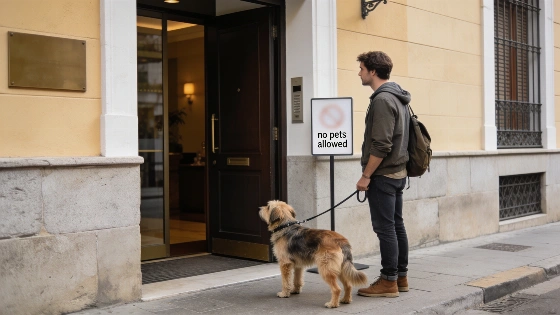
Anyone traveling with a dog in Spain now faces a crucial detail at hotel doors: a visible sign indicating whether pets are welcome. Under Article 29 of the Ley 7/2023, hotels and similar accommodations are free to decide if they accept animals. However, if they choose to prohibit pets, they are legally required to display a clear notice at the entrance, making their policy unmistakable before guests step inside.
The Ley de Bienestar Animal, which came into force in 2023, does not force all hotels to become pet-friendly. Instead, it sets out how establishments must communicate their stance. The law’s wording is precise: hotels, restaurants, bars, and other public venues “may allow the entry of companion animals” as long as this does not pose a risk to people, other animals, or property. But if they opt to refuse animals, they must inform the public with a sign visible from outside.
Hotel Policies and Legal Requirements
Article 29 covers access for pets not only in hotels but also in restaurants, bars, and other spaces where food and drink are served. The law allows these businesses to set their own rules, provided they comply with public health regulations and local ordinances. Importantly, even if a hotel is pet-friendly, animals are still barred from areas where food is prepared, stored, or handled, unless specific exceptions apply.
This approach means there is no automatic right for pet owners to bring their animals into any hotel. The law distinguishes between allowing pets and the obligation to communicate a ban. If a hotel does not accept dogs or other animals, it must make this clear to avoid confusion or disappointment at check-in.
What the Law Means for Travelers
For travelers, the most practical impact is the requirement for visible signage. Before entering, guests can immediately see whether their pet will be allowed. This transparency aims to prevent misunderstandings and ensure that both pet owners and those who prefer animal-free environments know what to expect.
The law also reinforces the need to respect health and safety standards. Even in establishments that accept pets, animals are not permitted in kitchens or food storage areas. Local regulations may impose further restrictions, so travelers should always check in advance, especially in regions with stricter rules.
Broader Animal Welfare Measures
The Ley de Bienestar Animal introduced several other obligations for pet owners and businesses. For example, dogs cannot be left unsupervised for more than 24 hours, and it is illegal to leave animals locked in vehicles if their safety could be at risk. The law also tightened rules on the sale and transfer of dogs, cats, and ferrets, aiming to improve animal welfare across Spain.
While these measures are separate from hotel policies, they reflect a broader shift toward responsible pet ownership and clearer communication between businesses and the public. For anyone traveling with a dog, the new signage rule under Article 29 is now a key detail to check before booking accommodation.