In Santiago-Pontones, more than 170 shepherds—many of them young—have revived large-scale grazing to keep public lands clear and prevent devastating wildfires. Their approach has not only protected the landscape but also brought new life to the local economy.
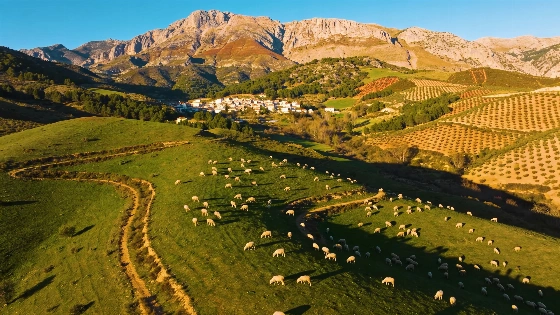
Every day, 70,000 sheep move across the rugged hills of Santiago-Pontones, quietly performing a task that has kept this corner of Jaén remarkably free from major wildfires. Instead of relying solely on firebreaks or emergency crews, the municipality has embraced a centuries-old solution: letting livestock do the work of clearing dry brush and undergrowth before it can become fuel for disaster.
Since 2019, more than 170 local shepherds—including 80 under the age of 40—have joined forces to manage nearly 20,000 hectares of public land in the Sierra de Segura. Their flocks graze on grasses and shrubs that would otherwise accumulate and dry out, dramatically reducing the risk of large-scale fires. Residents say they cannot recall a serious wildfire in recent years, a claim that stands out in a region where steep terrain and scattered settlements make fire prevention especially challenging.
Rapid Response to Fire Threats
While the area is not immune to fire, the difference is in the scale and response. On July 26, a blaze broke out near Cortijo de la Sauquera, close to the village of Pontones. Thanks to a swift intervention by the Infoca wildfire service—supported by 40 ground crew, a fire engine, and two helicopters—the flames were stabilized within two and a half hours. Several smaller outbreaks along a nearby road were also quickly extinguished, with local residents joining the effort. The speed and effectiveness of these responses highlight the value of keeping the landscape actively managed and free from excess vegetation.
Sheep as Land Managers
The Segureña sheep, native to the region, are especially suited to the steep, high-altitude terrain. As they graze, they not only consume potential fire fuel but also enrich the soil with organic matter, supporting natural regeneration. This work continues year-round, not just during the fire season. Antonio Punzano, one of the program's leaders, calls the animals "the true managers of the land." In some areas, goats or cattle are also used, depending on the landscape.
The revival of grazing came after years of decline. By 2011, the local sheep population had dropped to around 35,000, and many young people saw little future in the profession due to low profitability and bureaucratic hurdles. The turning point came when shepherds formed a cooperative to jointly manage grazing rights and, with support from the Andalusian government, gained access to public lands. This opened the door to European agricultural subsidies and allowed the managed area to expand rapidly.
Economic and Social Impact
Access to public land has transformed the economics of shepherding in Santiago-Pontones. A farm managing 200 hectares can now receive up to €18,000 in European funds, with larger operations earning even more. This financial stability has encouraged a new generation to return to the land. Among them is Alicia Fernández, who left a career in finance to run a family farm in the small village of La Matea. Today, she manages 900 sheep and 70 cows, and says the business is now sustainable.
The program has also helped stem rural depopulation. Many of the 170 participating shepherds are the children of former herders who have come back after studying or working elsewhere. The result is a rare example of generational renewal in a region where many villages are shrinking.
Transhumance and Broader Benefits
The work does not stop at the municipal border. Each winter, shepherds lead their flocks on a 300-kilometer journey to the warmer Sierra de Andújar, a tradition known as transhumance. For nearly six months, the animals graze in new pastures, helping to clear vegetation along the route and in their winter quarters. The expansion of public grazing rights has also reduced costs, as shepherds no longer have to pay high fees to cross private land. There are plans to extend the system to an additional 11,000 hectares between Baños de la Encina and Andújar.
Combining Approaches for Fire Prevention
Experts and shepherds alike stress that grazing is most effective when combined with other land management strategies, such as crop rotation, controlled burns, and mechanical clearing. Different animals play different roles: cows are suited to open areas, goats can penetrate dense brush, and wild ungulates can also help control vegetation. The Santiago-Pontones model demonstrates how economic activity, environmental stewardship, and rural vitality can reinforce each other.
As climate change increases the risk of catastrophic wildfires across southern Europe, the experience of this Jaén village offers a practical example of how traditional practices, adapted to modern needs, can deliver results. By keeping the land active and the community engaged, Santiago-Pontones has found a way to protect both its people and its landscape.