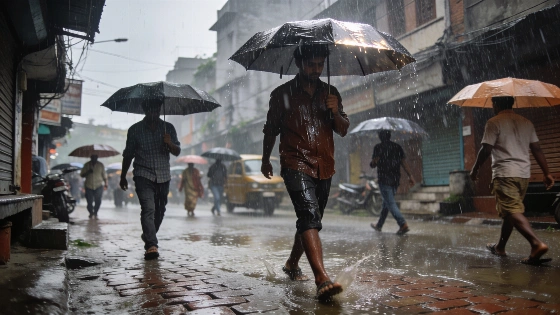
The India Meteorological Department has warned of heavy rain in Punjab, Haryana, Chandigarh, and Delhi on August 15, 17, and 18. Monsoon activity remains weak in key regions. Authorities have issued a yellow alert.
The India Meteorological Department (IMD) has placed Punjab, Haryana, Chandigarh, and Delhi under a yellow alert for heavy rainfall on August 15, 17, and 18. This warning comes as monsoon activity in Punjab and Haryana continues to lag, with both states experiencing weaker than usual rainfall in recent days. The IMD expects fairly widespread to widespread showers across these areas on the specified dates, while other days this week are likely to see only isolated or scattered rain.
According to the latest IMD bulletin, the western Himalayan region is also set for heavy to very heavy rainfall in some locations, with the plains of northwest India, including the affected states, forecast to receive significant precipitation during much of the week. Despite these warnings, the monsoon has been notably subdued in Punjab and Haryana over the past 24 hours, with only light to moderate rain, occasional thunderstorms, and lightning reported at isolated spots. Temperatures in both states have remained above seasonal norms.
Rainfall data for August shows a stark contrast between the two neighboring states. Punjab is facing a 42 percent monsoon deficit so far this month, while Haryana has recorded rainfall 30 percent above normal. However, when considering the entire monsoon season from June 1, both states are below the long-period average: Punjab by 34 percent and Haryana by 16 percent. These figures highlight the uneven distribution of rainfall and the ongoing challenges for agriculture and water management in the region.
The IMD has extended its forecast to include Himachal Pradesh, Jammu and Kashmir, Ladakh, and Uttarakhand, predicting fairly widespread to widespread rainfall in these Himalayan states until August 20. Heavy rain is expected at several locations, raising concerns about possible localised flooding and disruptions. The pattern of weather alerts in northern India mirrors recent warnings in Spain, where authorities have also issued alerts for severe storms and hail in northern and eastern regions.
For context, the IMD's color-coded alert system is designed to help local authorities and residents prepare for adverse weather. A yellow alert signals the need for vigilance and readiness for potential disruptions, but does not indicate immediate danger. The current warnings reflect the unpredictable nature of the monsoon, which remains a critical factor for agriculture, water supply, and daily life across northern India. The situation is being closely monitored, with further updates expected as weather patterns evolve.