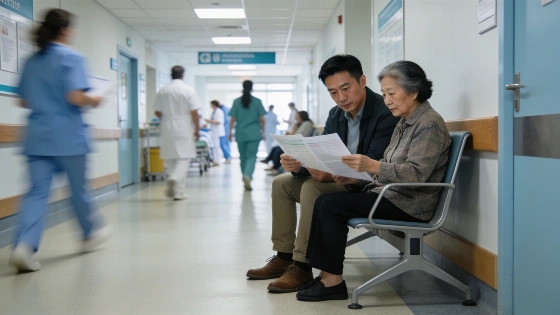
A private interpreter at Fundación Jiménez Díaz helps dozens of Chinese patients daily. His services fill a gap in public healthcare translation. The demand highlights ongoing challenges for non-Spanish speakers in Madrid’s hospitals.
At Fundación Jiménez Díaz in Madrid, a discreet interpreter known as Marcos has become an essential figure for the city’s Chinese community. For nearly two decades, he has guided up to a dozen or more Chinese patients each day through medical consultations, ensuring they understand diagnoses, treatments, and administrative procedures. His work, which is not officially part of the hospital staff, is paid directly by patients or Chinese associations, with fees ranging from 10 to 30 euros per visit—often totaling between 1,000 and 2,500 euros weekly.
Marcos, who prefers to keep his real name private, was born in Italy to Chinese parents and moved to Spain as a child. Fluent in Spanish, Mandarin, and his family’s regional dialect, he bridges the language gap for many who struggle with Spanish, especially older residents. The majority of his clients come from the Cobo Calleja industrial area, home to a large Chinese business community. Saturdays see a surge in demand, as many travel from Fuenlabrada and other suburbs to combine medical appointments with his assistance.
His role extends far beyond simple translation. Marcos often manages the entire process for patients, from preparing for surgery to handling paperwork and communicating with doctors. He is so trusted that some clients authorize him to act on their behalf for all medical matters. While Madrid’s public health system offers telephone translation, many patients prefer Marcos’s in-person support, citing the complexity of hospital bureaucracy and the reassurance of direct communication.
The need for such services is not unique to Madrid. Across Spain, migrant associations have long pointed to the lack of stable, in-person interpretation in public healthcare. Marcos’s experience began in 2007, when he helped a distressed Chinese woman at the hospital and realized the scale of the problem. Since then, he has seen generations of doctors pass through the hospital, while his own client base has grown through word of mouth rather than advertising.
Despite offers to join hospitals as a permanent interpreter, Marcos values his independence and chooses his clients carefully. He avoids cosmetic surgery cases and no longer assists with voluntary terminations of pregnancy, after being offered commissions by private clinics. His focus remains on helping those who genuinely need support navigating the Spanish healthcare system.
Marcos notes that while the system works well for serious illnesses, patients with less urgent conditions often struggle to understand the process and may be left confused after multiple appointments. His work, therefore, is not just about language but about making the system accessible to those unfamiliar with its rules. This challenge is echoed in other parts of Spain, where hospitals are adapting to the needs of diverse populations. For example, some facilities have introduced new diagnostic methods to improve patient safety, as seen when a hospital in Guadalajara adopted a blood test for severe allergies, detailed in this recent report.
According to the National Statistics Institute, Madrid is home to Spain’s largest Chinese community, with over 63,000 residents. The ongoing reliance on private interpreters like Marcos highlights a persistent gap in public services. As Spain’s population becomes increasingly diverse, the demand for accessible, culturally sensitive healthcare is likely to grow, making the role of independent interpreters ever more critical for many families.