La Graciosa, north of Lanzarote, remains one of Spain’s last truly unspoiled islands. With no paved roads and fewer than 800 inhabitants, it offers rare volcanic scenery, pristine beaches and a way of life shaped by the Atlantic and local fishing traditions.
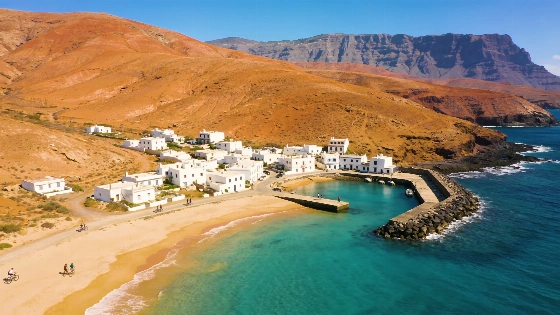
Whitewashed houses and fishing boats greet visitors as the ferry docks at Caleta de Sebo, the only real settlement on La Graciosa. Here, the Atlantic breeze carries the scent of fresh fish, and the streets are covered not with asphalt, but with soft sand. The absence of paved roads is not a quirk but a defining feature: only a handful of authorized vehicles are allowed, and most people get around on foot, by bicycle, or in licensed 4x4 taxis.
La Graciosa, part of the Chinijo Archipelago Natural Park, covers less than 30 square kilometers and is home to just over 700 permanent residents. The island sits just north of Lanzarote, separated by the narrow El Río strait, and is surrounded by a vast marine reserve established in 1995 to protect its unique underwater habitats and fishing grounds.
Arrival and Getting Around
Reaching La Graciosa means a 25-minute ferry ride from Órzola, at the northern tip of Lanzarote. Private cars are not permitted on the island, preserving its tranquil atmosphere and fragile environment. The lack of conventional traffic means the sounds of engines are replaced by the rhythm of the sea and the daily life of the port.
Once ashore, visitors find themselves in a place where time seems to slow. The sandy lanes of Caleta de Sebo lead to beaches and volcanic hills, with bicycles and walking the preferred ways to explore. The terrain is mostly flat, but loose sand and strong winds can make even short journeys feel like an adventure.
Wild Beaches and Volcanic Scenery
La Graciosa’s coastline is a showcase of natural contrasts. On the northwest, Las Conchas beach stretches out in pale sand, facing the islet of Montaña Clara and the red slopes of Montaña Bermeja. The Atlantic surf here is powerful, and swimming is often discouraged for safety. In contrast, the small cove of La Cocina—also known as Playa de Montaña Amarilla—lies about six kilometers from Caleta de Sebo, sheltered from currents and ideal for swimming or snorkeling beneath ochre volcanic cliffs.
To the south, El Salado and La Francesa offer turquoise waters and views across to the dramatic cliffs of Famara on Lanzarote. Each beach has its own character, but all share a sense of isolation and raw beauty that is increasingly rare in the Canary Islands.
Exploring by Foot and Bike
With no paved roads, cycling is one of the best ways to discover La Graciosa. Several rental shops in Caleta de Sebo provide bikes and maps for marked routes leading to beaches and volcanic sites. The island’s four main hiking trails cross open, treeless terrain, so visitors are advised to bring water, sun protection, and a hat—especially during the hottest months, when shade is scarce and the sun can be unforgiving.
Staying on marked paths is essential to protect the delicate ecosystem, which includes dunes, hardy native plants, and species found nowhere else in the archipelago. The rules are clear: venturing off-trail can damage habitats that have survived here for centuries.
Fresh Seafood and Local Flavors
Dining on La Graciosa is centered in Caleta de Sebo, where simple restaurants and terraces serve up the day’s catch just steps from the sand. Menus change with the tides, featuring local fish such as bocinegro and moray eel, alongside Canarian staples like papas arrugadas with mojo, gofio, island cheeses, and wines from Lanzarote.
The island’s culinary identity is inseparable from its fishing heritage and Atlantic setting. Meals are unpretentious but deeply rooted in local tradition, offering a taste of a way of life that endures despite the pressures of modern tourism.
Preserving a Unique Way of Life
La Graciosa’s commitment to conservation shapes every aspect of daily life, from its unpaved roads to its protected landscapes and sustainable fishing. The result is an island that feels worlds away from the crowded resorts of the Canaries, where nature and tradition still set the pace. For those seeking a different side of Spain, La Graciosa offers a rare glimpse of what the archipelago once was—and what it still can be.
For readers interested in stories of Atlantic crossings and the challenges of island life, the journey of Papa Dia from an undocumented arrival to a top-rated Cabify driver in Madrid offers another perspective on adaptation and resilience in Spain’s diverse regions. Read more in this feature on personal transformation and new beginnings.