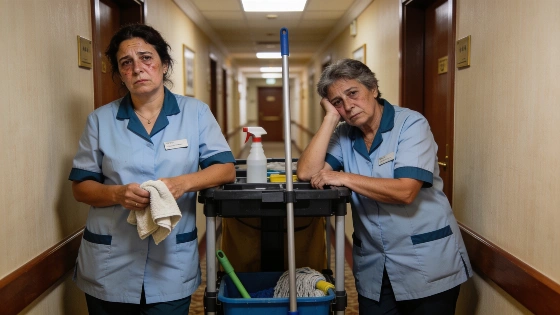
Las Kellys, the association of hotel cleaners, mark 12 years of protests against deteriorating work conditions. They report severe health impacts and blame subcontracting for lower pay and increased vulnerability.
Hotel cleaners across Spain, organized under the group Las Kellys, have marked 12 years of protests, drawing urgent attention to the severe health consequences and declining work conditions in the sector. In Madrid and Barcelona, members described a daily reality shaped by chronic pain, heavy medication, and a relentless pace driven by subcontracting practices that have become widespread in the hotel industry.
Maria del Mar Jiménez, president of Las Kellys de Madrid, traveled to Barcelona this week not for leisure, but to join the annual demonstration. She detailed the physical toll of decades spent cleaning hotel rooms: multiple herniated discs, damaged hands, and persistent pain requiring strong medication. According to Jiménez, many colleagues rely on painkillers and muscle relaxants just to get through their shifts, with some resorting to anxiety medication at night due to the intensity of their symptoms.
Las Kellys argue that the shift from direct hotel employment to outsourcing—first through temporary agencies, then through service companies—has led to a sharp drop in wages and protections. Workers are often placed under cleaning sector agreements rather than hospitality contracts, resulting in pay gaps of €600 to €800 per month. The pressure to clean rooms quickly, under constant supervision, has only increased as hotels seek to maximize occupancy and efficiency.
Juani Pérez, a spokesperson for the group in Barcelona, emphasized longstanding demands: early retirement options, recognition of work-related illnesses, ergonomic risk assessments, and improved equipment such as adjustable beds and motorized carts. She criticized the hotel and tourism industry for maintaining high profits while staff conditions deteriorate, stating that the health of cleaners is sacrificed in hotel corridors.
Magnolia Cuevas, another member, highlighted how subcontracting leaves workers more vulnerable and financially insecure. She noted that striking is rarely an option, as cleaners are only paid for days worked, making collective action difficult. The lack of union coverage further weakens their bargaining position, as Las Kellys operate as associations rather than formal unions.
Eulalia Corralero, a founding member with 45 years in the sector, expressed frustration at ongoing outsourcing and wage reductions. She pointed out that dividing staff into smaller groups undermines their ability to negotiate, and many do not reach retirement age in active employment due to permanent disabilities. Those who are declared unfit to work often survive on half their previous income.
Ernest Cañada, a geographer from Alba Sud, a tourism research center, described the widespread medicalization of hotel cleaners as a systemic issue. He linked the dependence on medication directly to the physical demands and organization of their work, which is repetitive, intense, and performed under significant time pressure. Cañada also questioned the lack of recognition for a role that is fundamental to the tourism sector, noting that employers often blame workers for not following ergonomic guidelines, despite the realities of the job.
While the struggle of Las Kellys continues, the broader context of labor rights in Spain remains in focus. Recent debates over working conditions in other sectors, such as the introduction of new uniforms for Congress ushers by a Madrid-based costume company, have also highlighted the intersection of tradition, modernization, and workers' welfare. For more on how workplace changes are affecting staff in Spain's institutions, see this report on new uniforms for Congress ushers.
Spain's hotel industry is a cornerstone of the national economy, employing hundreds of thousands and attracting millions of tourists annually. However, the persistent issues raised by Las Kellys point to a deeper challenge: balancing profitability with the health and dignity of frontline workers. As the sector continues to evolve, the experiences of hotel cleaners serve as a stark reminder of the human cost behind the country's tourism success.