Madrid’s city council has provisionally approved a sweeping redevelopment in Puente de Vallecas, set to replace the derelict Borondo factory with 1,400 new homes, extensive green spaces, and improved public infrastructure. The project aims to reconnect neighborhoods and boost sustainable mobility in the city’s south.
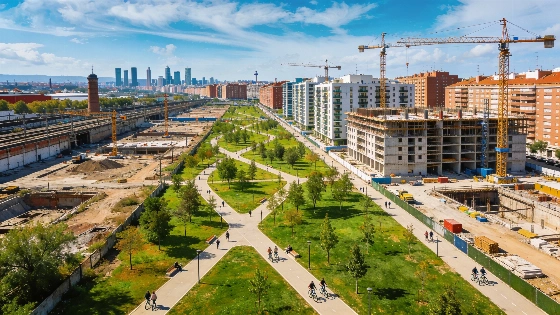
Madrid’s city council has taken a decisive step toward reshaping the southern district of Puente de Vallecas, provisionally approving a plan to convert the long-abandoned Borondo factory site into a vibrant new residential and public space. The Tubos Borondo project, covering over 137,000 square meters, is designed to deliver 1,400 homes—35% of which will be protected housing—alongside parks, public facilities, and new pedestrian and cycling routes.
The area, bordered by Calle de la Arboleda, the Vicálvaro-Vallecas road, Avenida de la Albufera, and the Vallecas Polytechnic Campus, has stood largely unused since the demolition of the Borondo concrete factory in 2021. According to city officials, the derelict industrial land has acted as a physical barrier between key neighborhoods and institutions, including the Campus Sur of the Universidad Politécnica de Madrid, Hospital Infanta Leonor, and the Palomeras municipal sports center. The new urban plan aims to break down these barriers, improving connectivity and accessibility across Puente de Vallecas.
Housing and Urban Design
The Tubos Borondo development will feature a mix of building heights and layouts, integrating residential blocks with green corridors and public amenities. Of the 1,400 planned homes, 35% will be reserved for protected housing—a figure that exceeds the city’s legal minimum of 20%. The project also allocates space for economic activity, ensuring a blend of living, working, and recreational environments.
Green spaces will play a central role, with the masterplan envisioning parks and landscaped areas woven throughout the new neighborhood. Public and private facilities will be integrated to support both new and existing residents, while sustainable mobility is prioritized through dedicated pedestrian and cycling paths.
Strategic Renewal for Southern Madrid
This initiative is one of the first major actions under Madrid’s “Estrategia del Sur,” a municipal strategy targeting urban, economic, and environmental renewal across the city’s southern districts, including Latina, Carabanchel, Usera, Villaverde, Puente de Vallecas, Villa de Vallecas, Moratalaz, Vicálvaro, and San Blas-Canillejas. The Tubos Borondo plan is currently awaiting final approval from the regional government of the Comunidad de Madrid.
The project also forms part of the broader DEMO 360 Vallecas area, a sustainable urban innovation zone framed by the A-3, M-40, railway lines, and Avenida de la Albufera. Planned improvements include safer connections between the university campus, Pueblo de Vallecas, Vallecas Cercanías station, and Metro Sierra de Guadalupe, as well as enhanced public transport links—supported by more than ten EMT Madrid bus lines serving the area.
Focus on Sustainability and Health
Environmental considerations are central to the redevelopment. The plan incorporates bioclimatic design principles, low-emission buildings, and passive architecture. The surroundings of Hospital Infanta Leonor will be revitalized with new green spaces, including a public park, a link to the city’s Metropolitan Forest, and a therapeutic garden. Other disused industrial sites nearby, such as Santa Luisa and the Vallecas substation, are also slated for transformation, potentially adding over 360,000 square meters of new urban uses.
Madrid’s approach to urban renewal echoes broader European trends in sustainable infrastructure, as seen in projects like Switzerland’s extensive underground transport network, which is reshaping mobility and land use across the continent. For more on how large-scale infrastructure can transform cities, see this analysis of Switzerland’s subterranean freight tunnels.
With the Tubos Borondo project, Madrid signals its intent to address housing needs, reconnect fragmented neighborhoods, and set a new standard for sustainable urban development in the Spanish capital’s south.