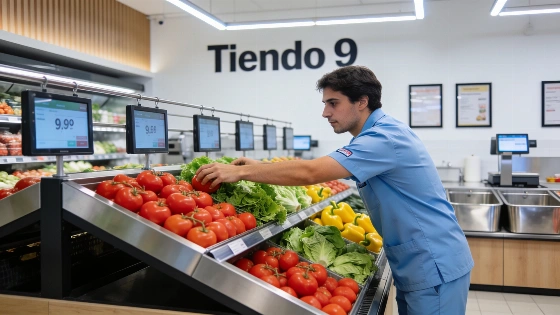
Mercadona has opened its first 'Tienda 9' supermarkets in Madrid and Bilbao. The company invested €11 million in these locations. The new model promises greater efficiency and a focus on fresh products.
Mercadona has taken a decisive step in modernizing its supermarket network by opening the first stores under its new 'Tienda 9' concept in Madrid and Bilbao. The company, led by Juan Roig, is investing heavily in this transformation, with €11 million allocated to these two initial sites and a broader plan to overhaul all 1,600 stores in Spain by 2033. The new format is designed to centralize fresh product preparation and streamline in-store processes, aiming for both operational efficiency and a better customer experience.
The Madrid store, located at Joaquín María López 7 in Chamberí, is the flagship for this new model. Its construction involved 23 suppliers and required an investment of €9.2 million. The opening has created 28 new jobs, bringing the total staff to 48. The supermarket operates from Monday to Saturday, 09:00 to 21:30, and offers 37 parking spaces, including four for electric vehicles and eight for bicycles. The focus on fresh products is evident in the expanded central preparation area, which now brings together all fresh food processes in one place.
In Bilbao, Mercadona has launched its first 'Tienda 9' in Vizcaya, following a €1.9 million renovation of the store at Doctor Espinosa Orive 2 in Miribilla. This project involved 39 suppliers and 150 workers, resulting in a team of 54 employees at the new site. The store is open from Monday to Saturday, 09:00 to 21:00, and features a 67-space car park, with two spaces reserved for electric vehicles. The redesign prioritizes more space for fresh products and aims to enhance the overall shopping experience for customers in the area.
One of the key innovations in the 'Tienda 9' model is the integration of advanced electronic devices and collaborative tools that support self-management and faster decision-making. Refrigeration systems now use Aerofoil technology to reduce cold air loss, improving energy efficiency and comfort inside the store. Mercadona has also adopted CO2 as a refrigerant, which lowers environmental impact and increases sustainability. Technical upgrades to machinery and equipment further support long-term operational reliability and resource savings, with the company estimating up to 10% energy savings and up to 40% less water consumption.
Mercadona expects to have around 60 'Tienda 9' supermarkets operating by the end of 2026, as part of its ongoing investment in store modernization. The company’s approach reflects a broader trend among Spanish retailers to prioritize sustainability and efficiency in response to changing consumer expectations. This shift is also visible in other sectors, as seen when Madrid authorities introduced AI-powered sensors to monitor urban wildlife, a move that highlights the growing role of technology in everyday urban life. For more on how technology is shaping Spanish cities, see this report on Madrid's use of AI sensors for wildlife monitoring.
Mercadona’s investment in the 'Tienda 9' model signals a commitment to both environmental responsibility and improved service. The focus on centralizing fresh food preparation, reducing resource consumption, and upgrading technical infrastructure positions the company to meet evolving demands in Spain’s competitive grocery market. As the rollout continues, customers in more regions can expect to see similar changes in their local stores, with a clear emphasis on efficiency, sustainability, and convenience.