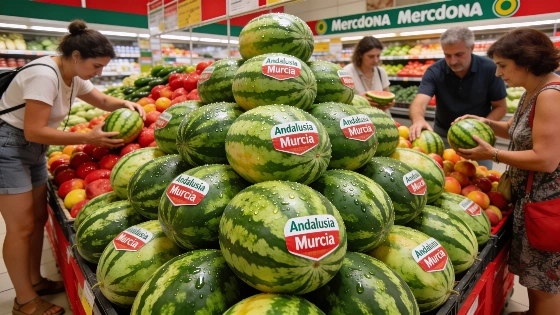
Mercadona is set to supply over 115,000 tonnes of Spanish watermelon this summer, a 38% jump from last year. The supermarket giant relies on local growers in regions like Andalusia and Murcia to meet soaring seasonal demand.
Mercadona has committed to a record-breaking purchase of Spanish watermelons for the 2024 summer season, aiming to secure more than 115,000 tonnes—an increase of 38% compared to the previous year. This move reflects both the supermarket’s focus on local sourcing and the growing appetite for watermelon during Spain’s hottest months.
The company’s supply chain is rooted in partnerships with specialist fruit and vegetable producers across the country. Watermelons destined for Mercadona shelves are grown in regions including Andalusia, Castilla-La Mancha, Murcia, the Canary Islands, the Valencian Community, Extremadura, and Catalonia. Key provinces such as Almería, Murcia, Córdoba, Sevilla, Ciudad Real, and Albacete are highlighted as major points of origin. One notable supplier is Agrícola Navarro de Haro S.L., a family-run business in Almería with deep expertise in watermelon cultivation.
The journey from field to store is tightly managed. Watermelons are picked at optimal ripeness, then transported to growers’ warehouses for packaging. From there, they move through Mercadona’s logistics network before reaching supermarket displays. The company emphasizes that only fruit meeting its strict quality standards makes it to the shelves—if the product falls short, it simply isn’t sold.
Seasonal Demand and Local Focus
Spain’s watermelon harvest peaks from spring through late summer, aligning with the period of highest consumer demand. For 2024, Mercadona has announced that all its stores will offer Spanish-grown watermelons, available both whole and pre-cut. The selection includes varieties such as Bengala, Red Jasper, Moon Gem, Fenway, Style, Bazman, and Boston, catering to different tastes and household sizes.
In previous years, Andalusia and Castilla-La Mancha have played a particularly significant role in national supply. For example, projections for 2025 suggest that over 39,800 tonnes will come from Andalusia alone, with Almería, Córdoba, and Sevilla leading production. This regional focus is part of Mercadona’s broader strategy to prioritize proximity and freshness whenever possible.
Why Watermelon Dominates Spanish Summers
Watermelon’s popularity in Spain is no accident. Its high water content, refreshing taste, and low calorie count make it a staple for beating the heat. According to nutritional data from the Cleveland Clinic and USDA, 100 grams of seedless watermelon contains just 30 calories, along with vitamin C, vitamin A, vitamin B6, potassium, and magnesium. These qualities drive a surge in consumption as temperatures rise, with shoppers seeking out fruit that is both hydrating and easy to serve.
Mercadona’s dual-format offering—whole and sliced—caters to a range of customers, from large families to single-person households. The emphasis on Spanish-grown produce also supports local agriculture and ensures that the fruit is harvested and delivered at peak freshness.
Context and Broader Trends
Mercadona’s approach mirrors a wider trend among Spanish retailers to strengthen ties with domestic producers and respond to consumer demand for transparency and quality. This focus on local sourcing is not unique to the fruit sector; for instance, other major retailers have also adapted their product lines to seasonal events, as seen when El Corte Inglés offered certified eclipse glasses ahead of a rare solar event (read more about how Spanish retailers adapt to seasonal demand).
As the summer progresses, Mercadona’s watermelon campaign stands as a clear example of how Spain’s largest supermarket chains are leveraging local agriculture to meet both practical needs and evolving consumer expectations.