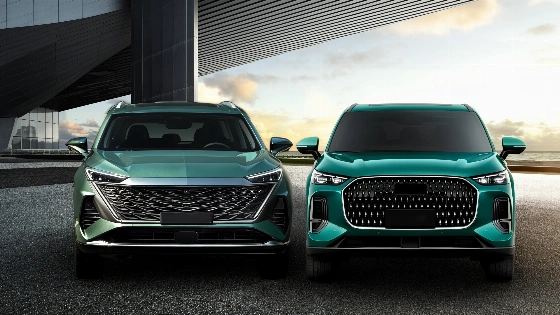
The MGS9 and Ebro S900 PHEV bring plug-in hybrid tech to the large SUV market, but their strategies differ sharply. Price, power, and equipment set them apart—making the choice less obvious than it seems.
Buyers looking for a spacious seven-seat SUV with plug-in hybrid technology now face a clear-cut dilemma: the MGS9 or the Ebro S900 PHEV. Both models, produced in China and aimed at the Spanish market, promise over 1,000 km of combined range and the coveted CERO emissions label. Yet, their approaches to price, performance, and features could not be more different.
The MGS9 positions itself as the most affordable option in its class, starting at €32,990 with financing and promotional discounts. In contrast, the Ebro S900 PHEV enters the market at €42,590 under similar conditions, justifying its higher price with more power, greater electric range, and a richer standard equipment list.
Size and Space
Both vehicles offer seven seats, but the MGS9 stands out for its larger footprint. Measuring 4,983 mm in length and 1,967 mm in width, it surpasses the Ebro S900 PHEV, which comes in at 4,810 mm long and 1,925 mm wide. This translates into a more generous boot: 557 liters for the MG versus 448 liters for the Ebro when all seats are in use.
Powertrains and Range
The MGS9 relies on a 1.5-liter turbocharged petrol engine paired with two electric motors, delivering a combined 299 hp and 390 Nm of torque. It accelerates from 0 to 100 km/h in 9.6 seconds and tops out at 200 km/h. Its 24.7 kWh LFP battery enables up to 100 km of electric-only driving, with charging limited to 11 kW AC—enough to refill from 10% to 100% in about three hours.
The Ebro S900 PHEV, meanwhile, uses a 1.5 TGDI petrol engine and three electric motors for a total output of 425 hp. Its 34.46 kWh battery allows up to 140 km of electric range. The Ebro also supports fast charging up to 71 kW DC, letting drivers recharge from 30% to 80% in just 25 minutes, or fully recharge in 5 hours and 20 minutes on a 6.6 kW AC charger. Official consumption is 1.68 l/100 km, rising to 6.88 l/100 km with an empty battery.
Equipment and Features
Standard equipment on the MGS9 includes dual 12.3-inch screens, an eight-speaker audio system, 360-degree HD camera, wireless Apple CarPlay and Android Auto, electric tailgate, heated front seats, panoramic sunroof, and ambient lighting. The Ebro S900 PHEV raises the bar with automatic Full LED headlights, a 10.25-inch digital cluster, 15.6-inch multimedia touchscreen, wireless smartphone connectivity, navigation, intelligent voice assistant, dual-zone climate control, 540-degree panoramic HD camera, parking sensors front and rear, rain sensor, a premium 14-speaker SONY sound system, electrically adjustable and ventilated seats in the first two rows, and keyless entry and start.
Value and Verdict
The nearly €10,000 price gap between the two models is hard to ignore. For many families, the MGS9’s combination of space, 100 km electric range, and nearly 300 hp will be more than sufficient—especially given its larger boot and lower cost. However, those willing to invest more will find the Ebro S900 PHEV’s superior power, longer electric range, and rapid DC charging compelling, along with its more extensive equipment list.
It’s a segment where priorities matter: budget-conscious buyers may gravitate toward the MG, while those seeking maximum tech and performance will see the Ebro as the more future-proof choice. The arrival of these models reflects a broader trend of Chinese brands challenging established players in Spain’s electrified SUV market—a shift also seen with vehicles like the XPeng G9, which made headlines for its record-breaking charging speeds (see how the XPeng G9 is raising the bar for fast-charging SUVs).
As plug-in hybrids continue to evolve, the real winner may be the Spanish consumer, who now has more options than ever before—each with its own strengths and trade-offs.