Fifty-six migrants landed on Mallorca, Cabrera, and Formentera in four boats. Authorities intercepted all groups within hours. The incident highlights a sharp rise in arrivals to the Balearic Islands this year.
Fifty-six migrants landed on the Balearic Islands in four boats on a single morning, a sign of the region's growing migration pressures. The arrivals were spread across Mallorca, Cabrera, and Formentera, prompting a swift response from local authorities as the number of boats and people continues to rise.
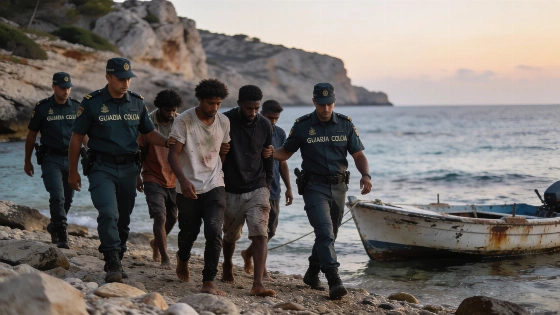
By 10 a.m., the Guardia Civil and Salvamento Marítimo had located and detained all four groups. The first, 12 people of Maghrebi origin, was found at dawn on Cabrera. About thirty minutes later, another four Maghrebi migrants were intercepted at Cala Galiota in the Colònia de Sant Jordi area of Mallorca. The pace continued: at 9:35 a.m., a boat carrying 11 Maghrebi migrants was discovered three miles south of Formentera. The largest group—29 people from sub-Saharan Africa—was stopped at Illetes in Calvià, Mallorca, after reaching shore in a single vessel.
These landings are part of a broader trend. The latest figures from the Ministry of the Interior and the Delegación del Gobierno in Baleares show that as of September 4, 2026, 4,982 migrants have arrived in 267 boats since the start of the year. This already surpasses earlier reports of 273 boats and 5,079 migrants, showing how quickly the situation is changing. For comparison, 2025 saw 401 boats and 7,321 arrivals—a 24.5% increase in migrants and nearly 15% more boats than the year before. Official Spanish government statistics confirm that pressure on Balearic border management is growing.
Authorities have not released further details about what will happen to those intercepted. The rapid response highlights a system under strain. The Balearic government has previously called for more transparency and support from Madrid, especially after reports of security risks and a lack of early warnings to local officials, as noted in a recent report.
Spain's Mediterranean islands have become a common entry point for migrants trying to reach Europe. The Balearics now face logistical and humanitarian challenges similar to those seen in the Canary Islands and Ceuta. The steady increase in arrivals points to a shift in migration routes and exposes gaps in coordination between regional and national authorities. The government's current focus on interception and containment is being tested by the volume and frequency of landings. Without a clear plan for managing both immediate humanitarian needs and the long-term integration or return of new arrivals, the Balearic Islands could become a focal point in Spain's migration debate.