Miguel Indurain, legendary Spanish cyclist, describes how riders fueled themselves with simple foods like ham and cheese sandwiches during grueling races in the 1990s—long before energy gels and scientific nutrition plans became the norm. His story highlights just how much professional cycling has changed.
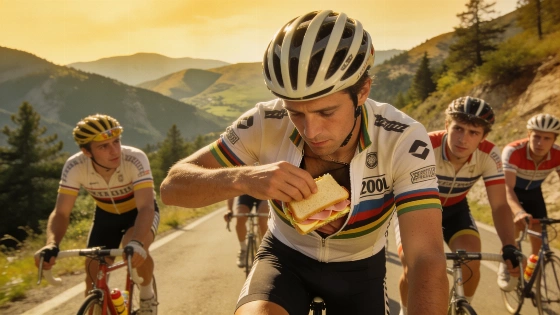
When Miguel Indurain powered through the toughest stages of the Tour de France in the 1990s, his fuel was not the high-tech gels or energy bars that dominate today’s peloton. Instead, as the five-time Tour winner recently recalled, he and his teammates relied on ham and cheese sandwiches and pastries to get them through the day.
Indurain, one of Spain’s most celebrated athletes, spoke candidly about the dramatic shift in cycling nutrition over the past three decades. “During the stage, we didn’t eat bars or gels, but sandwiches with ham and cheese or cakes,” he explained, contrasting the simplicity of his era with the precision of modern sports science.
Old-School Fuel
In the 1990s, professional cycling teams had little of the nutritional sophistication seen today. Riders faced brutal mountain stages and long hours on the bike with only basic foods, often prepared by team staff or picked up along the route. According to Indurain, it was common for team masseurs to buy sandwiches or pastries for the riders to eat during the race.
There was no talk of carbohydrate periodization or tailored macronutrient ratios. Instead, tradition and practicality ruled. This approach sometimes came at a cost: Indurain admitted he occasionally suffered from “pájaras”—the sudden energy crashes that can leave a cyclist unable to continue. These episodes, he noted, could be triggered by cold, dehydration, or simply forgetting to eat at the right moment amid the intensity of competition.
Discipline Off the Bike
While race-day nutrition was basic, Indurain’s overall diet was carefully managed. Throughout his career, he focused on pasta, rice, fruits, and vegetables, keeping red meat and eggs to a minimum. The goal was to maintain an optimal weight without sacrificing performance. Under medical supervision, he even shed several kilos gradually to improve his results in competition.
This discipline was part of a broader commitment that defined Indurain’s career from 1985 to 1996, a period in which he claimed five consecutive Tour de France titles and two Giro d’Italia victories, cementing his place among cycling’s all-time greats.
Modern Habits, New Priorities
Now 61, Indurain continues to pay attention to his diet, but for different reasons. He has lived with high cholesterol for years—a condition present even during his racing days. To manage it, he follows a balanced Mediterranean diet and stays active, though without the rigorous training of his professional years. He still rides his bike regularly, but now the focus is on health rather than competition.
Indurain’s reflections underscore how much professional cycling has evolved. Today, teams employ nutritionists who calculate every gram of carbohydrate, protein, and fat, adjusting intake to the demands of each stage. Energy gels and bars are standard, and every detail is optimized for performance and recovery.
Yet, as Indurain’s story shows, the sport’s legends once conquered the world’s hardest races with little more than determination—and a simple sandwich.