Nearly a third of Spanish workers over 55 want to keep working after reaching retirement age. New data reveals rising demand for flexible employment and exposes persistent age discrimination in the job market.
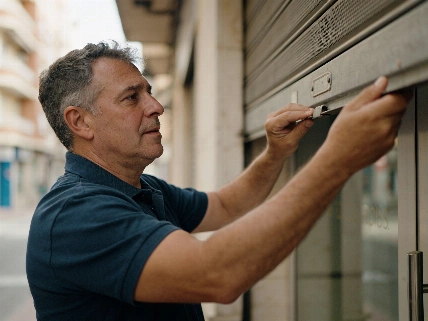
Many Spanish workers over 55 are not ready to retire. According to the latest VI Barómetro del Consumidor Sénior from Fundación Mapfre, 30% of people in this age group want to keep working after reaching the official retirement age. This interest grows with age: nearly half of those aged 65 to 69 say they want to stay employed, and among those over 70, the number rises to 73%.
But wanting to work longer is only part of the story. Health, the kind of job, and the size of the expected pension all matter. The chance to reduce hours or change responsibilities can make a difference, but not every employer is willing to offer that. The survey shows what people hope for, but many who want to keep working may still have to leave their jobs for reasons they can't control.
As of 2026, the official retirement age in Spain is 66 years and 10 months for most workers, with early retirement at 65 only available to those with a long contribution history.
Discrimination is still a major obstacle. One in five seniors says they have faced age-based bias, mostly in the job market. The sense that ageism is widespread is nearly universal: 85% of people aged 55 to 59 and 88% of those 60 to 64 see age discrimination as a serious problem. Still, proving illegal discrimination is difficult—it takes more than just struggling to find a job. Fundación Mapfre notes that these views are backed by steady survey results and point to a broader social issue.
Workforce participation drops quickly after 60. Fundación Mapfre's report shows that 78% of people aged 55 to 59 are still working, but this falls to 57% for those 60 to 64, and drops to just 12% between 65 and 69. Retirement is not the only reason for this decline; unemployment, disability, and caregiving also play a role. For those planning to retire, the process is not automatic. People must apply for their pension and check their work history, since benefits are not granted by default.
Working while collecting a pension is not a simple choice. Spain has several retirement options—active, flexible, and partial—each with its own rules and financial effects. Delaying retirement can bring incentives, while retiring early often means a permanent cut in pension payments. The best option depends on years worked, current job status, and when the application is made. Official guides and online tools can help with the numbers, but the outcome is always individual.
Recent data from Forbes Spain, based on EPA/INE statistics for Q2 2026, shows that there are 762,500 unemployed people over 50 in Spain, accounting for about 30% of all unemployed in the country. The problem is particularly acute for those over 55, with women in this group disproportionately affected by long-term unemployment.
Money, a sense of purpose, and personal identity all play a part in the decision to keep working. For some, the pension is not enough; for others, work gives structure and meaning. But the Spanish job market does not always make room for these needs. As reported earlier, even small business owners face growing pressures just to stay open, showing how hard it can be to remain active later in life.
Spain's aging population is forcing a rethink of old ideas about age and work. Fundación Mapfre's data shows a gap between what older workers want and what the system provides. Unless employers and policymakers address barriers like age discrimination and rigid job design, many seniors will find their ambitions blocked. With an aging population and a strained pension system, Spain cannot afford to overlook experienced workers.