Jesús Sanz, Archbishop of Oviedo, has compared anti-migration protests in Ceuta to the 'reconquista' and accused the government of failure. His statements revive tensions over Spain's migration policy and church-state relations.
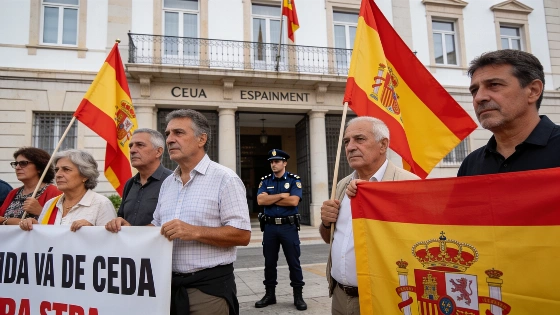
Jesús Sanz, the Archbishop of Oviedo, has stirred controversy by describing recent protests over the government's handling of migration in Ceuta as a modern-day 'reconquista.' In a public statement, Sanz praised demonstrators and compared their actions to the medieval Christian campaigns to reclaim Al Andalus, calling the current situation a fight to "recover what is worthwhile" in the face of what he described as "the Moroccan claim."
Sanz went further, openly criticizing the Spanish government for what he called "the inanition of a failed governance" in response to the influx of migrants. His remarks came as Covadonga hosted a religious gathering, blending religious symbolism with ongoing political disputes.
On September 3, 2026, Prime Minister Pedro Sánchez addressed the Spanish Congress regarding the Ceuta crisis and pledged to publish all reports and documents related to the government's actions.
This is not the first time Sanz has used charged language. He has previously called the arrival of more than 70,000 irregular migrants in Ceuta a "premeditated invasion" and compared the situation to a "new green march," referencing Morocco's 1975 campaign in Western Sahara. Sanz has said the Spanish government is too weak to respond, and while he has expressed sorrow for the deaths of 140 people during attempted crossings, he frames these tragedies as part of a narrative of manipulation and outside threat.
Sanz's position is at odds with the Spanish Episcopal Conference and the Vatican, both of which have called for more support for migrants, regularization plans, and rescue operations at sea. According to Vatican-linked media, Fernando Redondo Pavón, who leads the migration department of the Spanish Bishops' Conference, has condemned violence and called for dialogue, cooperation, and respect for migrants' dignity, emphasizing a humanitarian response. Sanz, by contrast, has distanced himself from these appeals and used his platform to criticize both migrants and government policy.
Controversy around Sanz is not limited to migration. Last year, he referred to Spanish Muslims as "moritos" and accused them of failing to condemn attacks on Christians abroad, after a local council banned Islamic celebrations in public sports facilities. His comments drew criticism from within the Spanish church, which had just warned that such bans were unconstitutional and discriminatory.
Recent reports from Spanish police suggest possible involvement of Morocco in organizing the mass influx of migrants into Ceuta, though the government has urged caution in interpreting these findings. The crisis has also been marked by the spread of disinformation linked to foreign actors and far-right networks, according to statements by Prime Minister Sánchez, who announced an additional €168 million in aid for Ceuta.
Sanz has also made his political leanings clear. During the 23-J election campaign, he released a pastoral letter attacking the government for using pardons as "bargaining chips" and urged support for "true firefighters" over "lying arsonists." He has openly sided with Vox, calling its members "ultracatholics," and mocked climate activist Greta Thunberg and her supporters.
These repeated interventions have made Sanz a divisive figure, both within the church and in Spanish public life. His use of historical references and inflammatory language risks deepening divisions at a time when Spain faces real challenges in migration policy and social cohesion. Rather than offering solutions, Sanz's approach seems aimed at escalating confrontation and reinforcing ideological divides, leaving the practical needs of migrants and the responsibilities of government in the background.
Spain's migration debate is already tense, with Ceuta and Melilla on the front line of irregular arrivals from Africa. The government's response has faced criticism from several sides, but Sanz's statements add a layer of religious and nationalist rhetoric that makes consensus harder to reach. As the country tries to address these issues, the Archbishop's words act more as a rallying cry for division than as guidance—an approach that could weaken both the church's moral standing and the state's ability to manage a difficult situation.