Spain has formally recognized Pazo de Meirás as a site of democratic memory. The estate, once linked to Franco, now enters public heritage. The decision follows a lengthy legal dispute over its ownership.
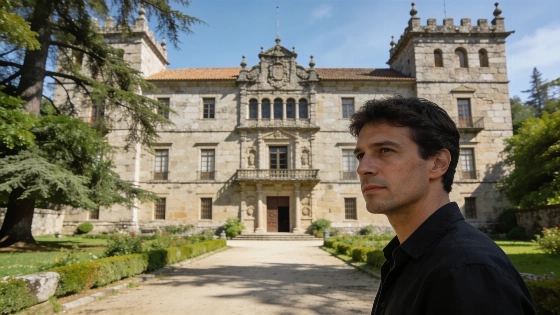
Pazo de Meirás in Sada (A Coruña) has been officially designated as a site of democratic memory by the Spanish government, marking a significant shift in the estate’s status and symbolism. The decision, published in the Boletín Oficial del Estado (BOE), recognizes the property as a key location for understanding Spain’s turbulent journey from dictatorship to democracy since 1936.
The BOE resolution highlights the estate’s dual historical significance: its association with Emilia Pardo Bazán, a major figure in Spanish literature, and its later transformation into a symbol of Francoist power. During the Second Republic, Meirás became a focal point for political and social tensions, including agrarian conflicts and anti-republican conspiracies involving members of the Pardo Bazán family. These events made the estate a witness to the fractures that preceded the Spanish Civil War.
In 1938, amid the Civil War, the so-called “Junta Pro-Pazo del Caudillo” was formed by local and provincial authorities to acquire the property for Francisco Franco. The purchase was funded through forced contributions from municipalities, officials, and private citizens, reflecting the climate of repression and coercion of the era. From that year until Franco’s death, the estate served as his summer residence and a center for political activity, including ministerial meetings such as the 1975 session that toughened the death penalty in the regime’s final months.
The estate’s role as both a private residence and an institutional hub for the Franco regime gave it a unique place in Spain’s collective memory. The BOE notes that Meirás became a powerful symbol of the dictatorship’s exercise of authority, shaping local power structures and leaving a lasting impact on the region.
After Franco’s death, the property remained in his family’s hands until a landmark court ruling in September 2020 declared the estate state property, nullifying the original donation to the Franco family. The ruling was upheld by higher courts, including the Audiencia Provincial de A Coruña and the Juzgado de Primera Instancia número 70 de Madrid, which in November 2024 confirmed the state’s ownership of all disputed assets. The Supreme Court’s decision in March 2025 ended the legal battle, paving the way for the estate’s full integration into public heritage and its opening to the public as a site of memory.
The BOE resolution emphasizes that Pazo de Meirás now serves as a testament to both the forced appropriation of property during times of repression and the eventual recovery of such assets as part of Spain’s democratic values and collective memory. The estate’s new status allows for its rehabilitation and public access, ensuring that its complex history is preserved and interpreted for future generations.
Spain’s approach to sites of memory reflects a broader European trend of confronting difficult pasts through public recognition and education. The transformation of Meirás is part of ongoing efforts to address the legacy of the Franco era, similar to how other countries have repurposed former symbols of authoritarianism. For context on how Spanish authorities are managing other sensitive social issues, see this report on delays in elderly care services in Madrid, which highlights the challenges of balancing historical memory with present-day social needs.
With the estate’s new designation, Pazo de Meirás stands as a physical reminder of Spain’s complex 20th-century history, offering a space for reflection on the processes of repression, resistance, and democratic renewal.