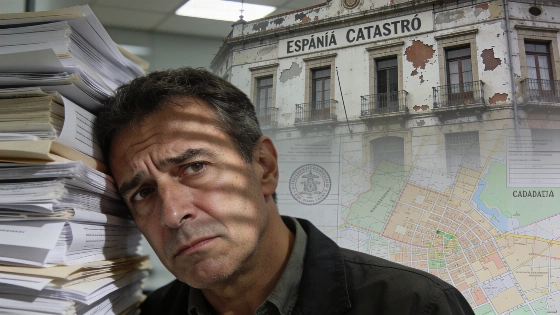
A Spanish property owner has spent nearly two decades seeking to correct a Catastro error that altered inherited land boundaries. The case highlights the challenges of contesting official records and the financial burden on individuals.
An unresolved administrative error in Spain's Dirección General del Catastro has left a property owner fighting for 18 years to restore the original boundaries of inherited land. The issue began when a portion of the property was removed from official records without notification, prompting the owner to gather all necessary legal documents, including the Property Registry, purchase deeds, and parental will, to request a correction.
Despite submitting comprehensive documentation, the Catastro responded with a formal refusal to alter the cadastral description. The process quickly became a bureaucratic maze, with the owner forced to repeatedly file claims and appeals. Even after the local Hacienda office acknowledged the mistake and prepared a written statement promising resolution, the Catastro maintained its position, demanding additional technical documents such as property plans and later geodetic coordinates. Each new requirement placed further financial and administrative strain on the owner, who argued that the burden of proof should not fall on those affected by official errors.
Efforts to resolve the dispute through the Tribunal Económico Administrativo and direct negotiations with Catastro officials proved fruitless. The owner ultimately turned to a legal expert, seeking to establish rightful ownership and shift the responsibility of proof back to the authorities. However, the costs incurred throughout this prolonged process are not recoverable, as Spanish law does not allow individuals to claim expenses from the Catastro, even when errors are confirmed.
The case underscores the rigidity of Spain's cadastral system and the difficulties faced by citizens in correcting official mistakes. The Catastro's reluctance to admit fault or compensate for mismanagement has left the property owner not only financially burdened but also emotionally exhausted. The situation remains unresolved, with the owner awaiting responses from higher authorities, while the inaccurate property description persists in official archives.
Spain's cadastral system, managed by the Dirección General del Catastro, is responsible for maintaining property boundaries and ownership records nationwide. Errors in these records can have significant legal and financial consequences, particularly for those inheriting property. The complexity of correcting such mistakes is not unique to this case; similar disputes have arisen in other regions, often requiring lengthy legal battles. In the context of broader property and administrative challenges, recent initiatives in cities like Valencia to address housing and land issues—such as the major public housing plan following the La Torre floods—highlight the ongoing importance of accurate land records and responsive public administration in Spain.