A former ETA member, now a protected witness, has revealed details about the group's leadership and its control over exiled militants. His testimony is central to a new investigation into ETA fugitives in Venezuela.
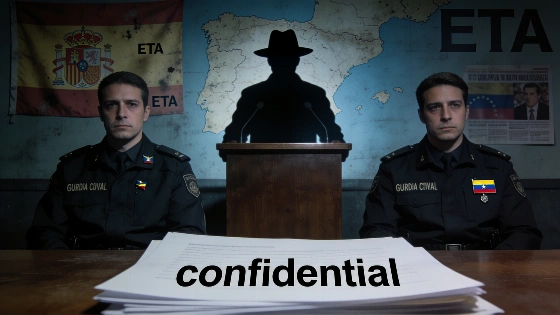
A former ETA member, now under protected witness status, has provided Spanish authorities with detailed testimony about the internal workings of the group's leadership and its oversight of militants who fled abroad. This new evidence, gathered by the Guardia Civil and identified in official documents as TP-GC-003-DI-9/23, is now part of a major case at the Audiencia Nacional focused on the presence of 14 former ETA members in Venezuela. The investigation, which began in 2024, is driven by the Fiscalía and the victims' association Dignidad y Justicia (DyJ), and already includes seven individuals under formal investigation.
The witness, who decided to cooperate with authorities in June 2023, described the command structure of ETA in detail, including the mechanisms used to maintain control over exiled members until the group's dissolution in 2018. According to his account, the leadership, known as the Zuzendaritza Batzordea (Zuba), consisted of 12 people, with a five-member executive committee responsible for key decisions such as attacks and kidnappings. The organization was divided into several operational units, including political, military, international, and logistical branches, each with its own departments for training, safe houses, border crossings, and vehicle theft.
Particular emphasis was placed on the international apparatus, which managed arms purchases, document forgery, and visa arrangements for exiles. The witness identified Josu Ternera (José Antonio Urrutikoetxea) as the head of this unit during his time in ETA. Within this structure, a special committee oversaw deported members, enforcing discipline and cohesion among those living in third countries. The committee also managed funds for exiles and monitored their behavior, reporting any misconduct to the leadership in southern France. The witness noted that returning to Spain or France was only permitted if required by the organization, and those wishing to leave ETA entirely were often assigned roles as sympathizers to maintain their involvement in support activities.
The testimony also revealed that exiled members received annual visits from lawyers and representatives of the left-wing abertzale movement, who inquired about their personal situations and monitored for dissent. These visits, according to the witness, functioned as a form of political oversight within the exile community. The Guardia Civil's recent focus on locating former ETA members willing to cooperate has become a key strategy in resolving unsolved attacks, especially those involving individuals with direct or indirect contact with the group's leadership or armed units.
This is not the first time former ETA members have become protected witnesses in Spanish courts. In 2023, two others provided information that contributed to at least nine cases, including reopened investigations into the killings of Miguel Ángel Blanco and Gregorio Ordóñez. However, the current witness is considered to have had closer access to the organization's leadership, having joined ETA in the late 1970s, served in a command unit, and later taken on other roles before seeking refuge abroad. His insights are seen as particularly valuable for understanding how ETA maintained control over its exiled members and managed its international operations.
The investigation into ETA's exiles in Venezuela comes amid broader scrutiny of Spanish interests in the region, especially as civil society responses to crises have highlighted the complex interplay between local and foreign actors. For example, recent events in Venezuela have shown how non-state groups and international networks can influence outcomes, as seen when local solidarity efforts overtook official responses after a major earthquake. This context underscores the challenges Spanish authorities face in tracking and prosecuting former militants who remain outside the country.
ETA, or Euskadi Ta Askatasuna, was a Basque separatist group responsible for hundreds of deaths over several decades before announcing its dissolution in 2018. The group's legacy continues to shape Spanish security policy and judicial investigations, particularly regarding unresolved crimes and the fate of exiled members. The current case highlights ongoing efforts to clarify the organization's structure and hold former members accountable, even years after the official end of its activities.