Mariano Rajoy’s recent comments on the French national football team have reignited debate over national identity in sport. His statement comes as Spain prepares to face France in the World Cup semifinals. The issue has deep roots in French football history.
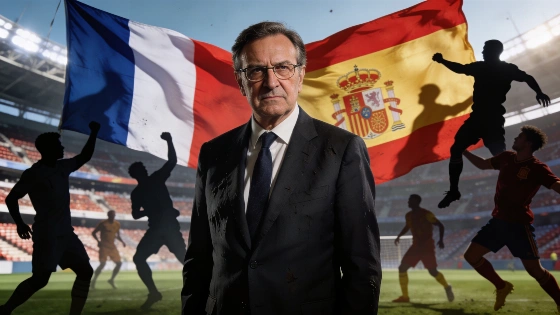
Mariano Rajoy, former Prime Minister of Spain, has triggered a new wave of controversy with his latest opinion piece on the World Cup, published after Spain secured a place in the semifinals. In his column for El Debate, Rajoy praised the high level of the French national football team but added a pointed remark: the squad, he claimed, achieves this "without French players." This comment, made just days before Spain’s crucial match against France, has reignited a longstanding debate about national identity and representation in French football.
Rajoy’s statement comes at a sensitive moment, as the Spanish team prepares to meet France in a high-stakes semifinal. He acknowledged France’s impressive record—two World Cup titles, a recent final appearance, and a top FIFA ranking—yet questioned the composition of the French squad. According to Rajoy, the team’s strength is notable, but he implied that its players do not reflect traditional French origins.
However, official data shows that only three out of the 26 players in the current French squad were born outside France: Michael Olise, Marcus Thuram, and Brice Samba. The majority of the team consists of players born in France, many of whom are descendants of immigrants from former French colonies. This diversity has been a hallmark of French football for decades, especially since the 1998 World Cup, when France’s victory brought attention to the multicultural backgrounds of stars like Zinedine Zidane, Lilian Thuram, Marcel Desailly, and Patrick Vieira.
The debate over who represents the “real” France on the football field is not new. In 1998, the far-right National Front, led by Jean-Marie Le Pen, argued that the national team did not embody authentic French identity because of the players’ African and Caribbean heritage. This rhetoric fueled a broader discussion about immigration, integration, and national belonging—a conversation that continues to echo in French society and politics today.
Rajoy’s remarks have drawn attention not only in Spain but across Europe, highlighting how questions of identity and representation remain sensitive in international sport. The controversy also comes at a time when political figures are increasingly scrutinized for their public statements, as seen in other recent cases involving Spanish politicians. For example, debates over party leadership and internal tensions have also made headlines, such as the ongoing situation in Valencia, where Francisco Camps has pressed for a regional congress amid leadership disputes.
France’s football team has long been seen as a symbol of the country’s complex relationship with its colonial past and its evolving national identity. The “Black-Blanc-Beur” (Black-White-Arab) generation of 1998 was celebrated by many as a model of integration, but also faced criticism from those who questioned whether the team truly represented France. Today, the composition of the squad continues to reflect the country’s demographic changes and the ongoing debate over what it means to be French. As Spain and France prepare to face off in the semifinals, the discussion sparked by Rajoy’s comments serves as a reminder that football, in Europe and beyond, is often about much more than the game itself.