Pedro Sánchez announced King Felipe VI will visit Ceuta for the first time in years. The decision follows rapid coordination with Morocco after a major migrant influx. Spanish authorities stress the importance of bilateral cooperation.
Spain’s Prime Minister Pedro Sánchez has confirmed that King Felipe VI will travel to Ceuta, marking the monarch’s first official visit to the autonomous city in over a decade. The announcement comes as Madrid and Rabat intensify cooperation following a recent surge of migrants crossing into Spanish territory from Morocco.
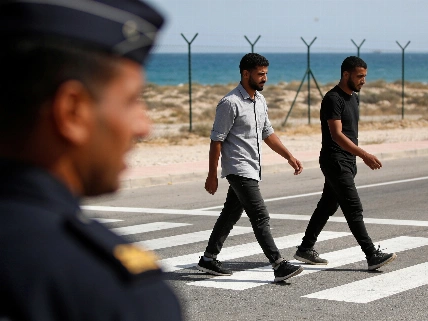
Sánchez, speaking on Cadena SER, emphasized that Moroccan authorities responded with “instant and immediate cooperation” after tens of thousands of migrants entered Ceuta by swimming. He detailed that both governments maintained constant communication on July 30 and 31, with Morocco launching operational measures on the second day to address the situation. The prime minister argued that the current context provides “sufficient reasons” for the head of state to visit Ceuta and Melilla, noting that the trip will take place once conditions are deemed appropriate.
Addressing the scale of the crisis, Sánchez acknowledged the exceptional nature of the migrant influx and highlighted the ongoing coordination with Rabat for the return of migrants, in line with Spanish law. He warned that without this bilateral understanding, the crisis could have escalated further. The prime minister also pointed to the growing prevalence of “dangerous political rhetoric” that frames state strength and human dignity as incompatible, insisting that robust rule of law can coexist with respect for migrants’ rights.
On the role of Spanish intelligence, Sánchez stated that no collaborating intelligence agency has raised doubts about Moroccan involvement in the events. He clarified that the CNI (National Intelligence Centre) and the National Police shared situational reports throughout the crisis. When asked about the origins of the mass entry—over 70,000 people in two days—Sánchez attributed it to the distortion of a Supreme Court ruling, which was spread on social media by criminal organizations. He linked this disinformation campaign to networks in Russia, Israel, and far-right international groups, claiming these actors exploited migration to destabilize Spain and Europe. According to Sánchez, false messages circulated online suggesting that migrants entering Ceuta by swimming could not be returned at the border, a claim he categorically denied.
The events in Ceuta have drawn significant attention in Spain, with public debate focusing on border management and the government’s response. As previously reported, local residents in Ceuta have staged protests demanding stricter enforcement and expulsions following the mass entry. The government’s handling of the crisis and its diplomatic engagement with Morocco remain under scrutiny.
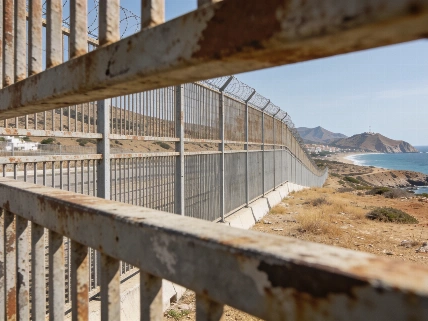
Ceuta and Melilla, Spain’s two enclaves on the North African coast, have long been focal points for migration from Africa to Europe. Both cities are heavily fortified and represent the European Union’s only land borders with Africa. The last royal visit to Ceuta and Melilla took place in 2007, when King Juan Carlos I and Queen Sofía traveled to the enclaves, sparking diplomatic tensions with Morocco. King Felipe VI’s upcoming visit is seen as a significant gesture, reflecting both the importance of the territories and the evolving relationship between Spain and Morocco. The government continues to monitor the situation closely, balancing border security with legal and humanitarian obligations.