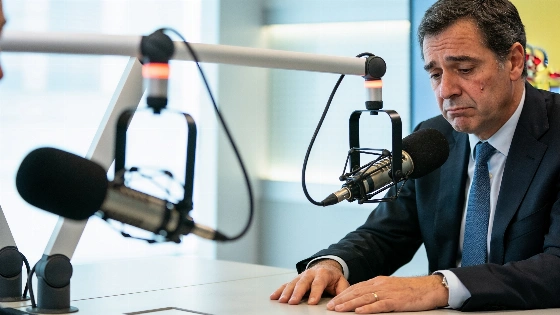
Pedro Sánchez’s recent interview revealed a striking lack of empathy amid Ceuta’s territorial crisis. His comments and demeanor have triggered criticism from political allies and residents. The government’s response is now under intense scrutiny.
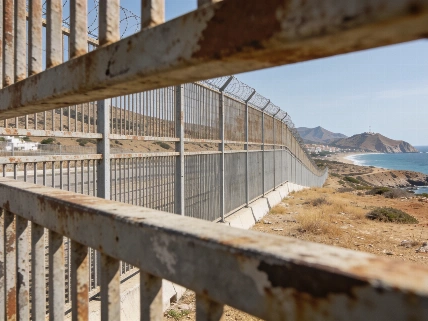
Pedro Sánchez’s recent interview on Cadena Ser has set off a wave of criticism—not so much for his words, but for the way he delivered them. As Ceuta faces its most serious territorial crisis in years, the Prime Minister’s distant manner and visible fatigue have left even his supporters questioning his leadership and sense of reality.
Rather than address the worsening situation in Ceuta directly, Sánchez defended his right to a summer break, putting himself closer to Mohamed VI than Felipe VI in the eyes of many. The timing and tone of his comments struck many as out of touch, especially as the city deals with what is widely seen as a threat to Spain’s territorial integrity. By insisting that criticism was about his vacation, not his absence during a national emergency, Sánchez only deepened the sense of disconnect.
Sánchez stated in his August 31 interview that there is no intelligence evidence implicating Moroccan authorities in orchestrating the mass migrant influx into Ceuta.
During the interview, Sánchez’s answers ranged from defensive to oddly detached. He downplayed the need for urgent action in Ceuta, while at the same time criticizing his political opponents for slow responses in other scandals. His claim that the “international far-right” was behind the organized border crossings from Morocco drew more disbelief than anger. Many listeners were left incredulous, especially as he justified not convening the National Security Council even as Ceuta’s situation worsened.
What stood out most was not the usual political maneuvering, but the lack of energy. Sánchez seemed tired, almost uninterested in his own arguments, missing the presence that once defined his public image. His comments about democratic alternation—saying it only applies if he considers the alternative legitimate—added to the sense that he is out of step with Spain’s political reality.
The fallout is now reaching Sánchez’s own party. Several socialist mayors joined public demonstrations on Ceuta Day, making it clear they would not put party loyalty above the city’s needs. This move highlights the growing risk of political isolation for the Prime Minister, as even longtime allies distance themselves from his handling of the crisis. The government’s position has also drawn attention to the wider rift between Moncloa and Zarzuela, as previously reported.
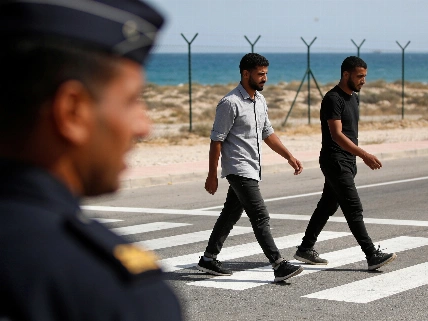
According to official figures cited by Sánchez, around 5,000 migrants remain in Ceuta, including 1,200 minors, out of approximately 70,000 who entered the city during the crisis. Nine out of ten have already been returned or have left, and since August 10, over 3,200 people have voluntarily departed to ease the pressure on local infrastructure.
For people in Ceuta, the government’s lack of visible support has left a sense of abandonment. Sánchez’s refusal to show empathy or take decisive action has made residents feel exposed and ignored. His attempts to shift blame—including a reference to Israel while clearing Morocco—have only added to the confusion and frustration.
Spain is no stranger to political controversy, but this episode marks a new low for leadership credibility. Sánchez’s performance on Cadena Ser did not project strength or resolve. Instead, it showed a leader worn out by his own story, unable to inspire confidence or respect. As the crisis in Ceuta drags on, Sánchez’s detachment risks defining his time in office—a warning of how fatigue and self-absorption can erode even the strongest political positions. At a moment when clarity and solidarity are needed, Spain is left with a Prime Minister who seems more isolated than ever.