Pedro Sánchez has held Morocco responsible for the failure of border controls during the Ceuta migration crisis. He is demanding answers while stopping short of accusing Rabat of organising the mass entry.
Pedro Sánchez has placed responsibility for the breakdown of border controls during the Ceuta migration crisis on Morocco. The Spanish prime minister said Madrid had demanded answers and corrective action from Rabat. He stopped short of accusing Moroccan authorities of organising or encouraging the mass entry.
That distinction is central to Sánchez's first direct criticism of Morocco over the episode. He points to a clear failure at the frontier. He has not said whether Moroccan authorities knew in advance how large the movement towards Ceuta would become.
Spanish authorities later described the peak flow as reaching approximately 5,200 people per hour, according to figures attributed to Defence Minister Margarita Robles’s parliamentary statement.
The crisis unfolded on 30 and 31 July. During an interview with CNN in New York, Sánchez said Spain had asked Morocco for explanations because its border system had failed. He did not go further. He did not publicly say that Rabat had deliberately caused the mass arrival.
The government's caution fits its wider policy towards Morocco. Sánchez said Madrid and Rabat had built a "very positive" bilateral relationship over the past eight years. His message pairs a formal demand for accountability with an effort to keep cooperation in place.
Information that emerged in the weeks after the crisis focused on activity detected in Morocco before 30 July. It also included social media messages encouraging crossings towards Ceuta. Those details have raised more questions about what Moroccan authorities may have known. They do not, by themselves, prove that Rabat promoted the mass entry.
The Centre for European Reform reported that Spanish authorities used an estimate of 72,000 arrivals, while other accounts placed the scale of the episode between 70,000 and 80,000. Spanish authorities also said that people were returned to Morocco within 48 hours; one analysis cited approximately 70,000 returns.
Spain remains caught between an accusation and a need to cooperate. The government wants a clear explanation of the failure. It also relies on Moroccan cooperation for border control, action against people-smuggling networks and returns carried out under the law. That cooperation continued after the July events.
The practical effects have remained concentrated in Ceuta. Almost two months after the mass entry, the government was still dealing with its aftermath. The Spanish government said it had received no warning about a crisis of that scale. Sánchez later said that no competent authority in Spain or the European Union had anticipated the events of 30 and 31 July.
The aftermath also put lasting pressure on Ceuta's infrastructure and migrant-management system. Reports described operations to move people from coastal areas to new camps or centres. The episode remained an administrative and humanitarian problem weeks after the initial crossings.
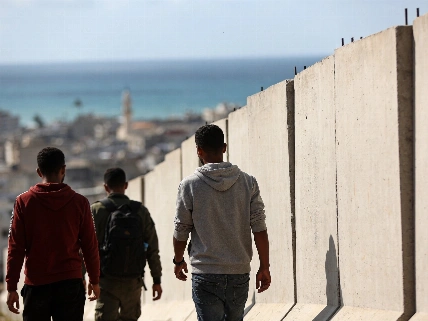
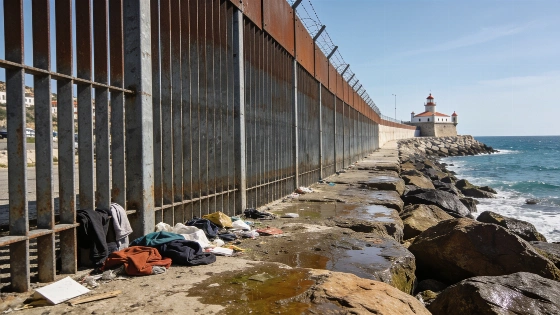
The physical reality of the border and the political dispute around it have shaped the episode. An earlier border report described tighter Moroccan security measures around Ceuta. Sánchez's latest comments add something new. Madrid is no longer making only general calls for cooperation. It is openly naming the failure of Morocco's control system.
The president has not turned that criticism into a claim that Morocco planned the crisis. That restraint matters. The available information raises questions about prior knowledge but does not prove deliberate encouragement. The government's position is narrow and clear: Rabat must explain the control failure, while Spain continues to treat the bilateral relationship as essential.
More recent reports say that returns to Morocco have continued every day. Spain's minister for territorial policy gave an indicative figure of 150 to 200 people per day. The figure shows that the border issue did not end with the peak of the July crisis. The two governments still depended on practical cooperation.
Sánchez's wording is politically cautious but carries a clear message. It assigns responsibility for the breach to the country controlling the other side of the frontier without alleging a planned operation. For Spain, this is the government's most precise public criticism so far. Cooperation with Morocco will continue alongside demands for answers, rather than giving way to open confrontation.