The Sinsal Festival on San Simón Island opens its 16th edition under new scrutiny. The site, now a Democratic Memory landmark, hosts secret concerts with only 800 attendees. Local authorities question the event’s future.
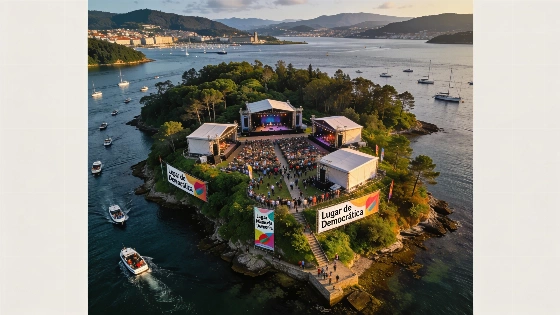
The Sinsal Festival has returned to San Simón Island in the Ría de Vigo, launching its 16th edition amid heightened attention after the site was officially recognized as a Lugar de Memoria Democrática by Spain’s central government. This year’s event, known for its secret lineup and strict 800-person capacity, is accessible only by boat, reinforcing its reputation as one of Spain’s most exclusive music gatherings. The festival’s future, however, is now under debate as local officials and memory groups question whether such events are appropriate at a location marked by a painful past.
San Simón’s history is central to the current controversy. Once a lazaretto and later a notorious Francoist prison, the island was used between 1936 and 1943 to detain over 5,600 Republican prisoners, mainly from Galicia and Asturias, in harsh conditions. More than 500 deaths have been documented, not including executions. The government’s recent decision to designate the island as a Democratic Memory Site has intensified scrutiny of cultural activities held there, including Sinsal.
The festival’s origins are closely tied to efforts to revive the island’s memory. In the mid-2000s, the Xunta, then governed by PSOE and BNG, tasked Sinsal’s founders with bringing cultural life to San Simón, which had been closed to the public for over 25 years. The first edition of the festival took place in 2010, after the island was opened and branded as Illa da Memoria (Island of Memory). Despite a later rebranding to Illa do Pensamento under the PP, the event continued, aiming to blend music with historical awareness.
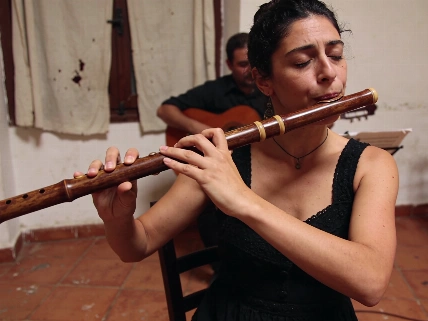
This year, the lineup features around twenty bands and soloists from Galicia, Germany, Colombia, England, Mali, Portugal, and Japan. True to tradition, artists’ names were only revealed to attendees upon arrival by boat. Concerts are held during daylight hours across four stages, accompanied by guided walks highlighting the island’s natural and historical heritage. These routes trace San Simón’s evolution from medieval inspiration for troubadours like Martín Códax to its role as a quarantine station and, later, a prison. The island also played a part in technological history, as the site of Galicia’s first underwater telegraph line.
Last year, as the Democratic Memory designation was pending, the socialist-led government of Redondela and the Colectivo Republicano de Redondela criticized the festival, arguing that it disrespects families of those persecuted during the dictatorship. The mayor described the event as offensive to victims’ descendants. Organizers, however, maintain that Sinsal was conceived as part of the island’s recovery and that cultural use should serve as an opportunity for remembrance, not a source of conflict.
Environmental responsibility is another hallmark of Sinsal. The festival enforces a strict waste policy: no bins are provided, and each attendee must manage their own rubbish. Single-use plastic cups are not distributed; instead, used cups are collected for recycling into Christmas lighting for Vigo. This year, for the first time, Sinsal’s program will extend beyond the island, with concerts scheduled in Vigo, Oia, and Braga in the coming week.
San Simón is not unique in Spain for repurposing sites of historical trauma for cultural events. The Museo de Arte Contemporáneo de Vigo (Marco), once a prison, and the Castillo de San Antón in A Coruña, which served both as a lazaretto and a Francoist jail, are other examples. The debate over how to use such locations remains unresolved, echoing broader questions about memory and public space. Similar tensions have surfaced at other Spanish festivals, as seen when the Sitges Film Festival marked the anniversary of ‘Carrie’ with restored classics and new horror films, drawing attention to the intersection of culture and historical memory (see coverage of the Sitges Film Festival).
San Simón’s status as a Democratic Memory Site means any future events will likely face increased oversight and debate. The Sinsal Festival’s approach—balancing cultural innovation with respect for the island’s past—will remain under close watch as Spain continues to grapple with how best to honor sites marked by historical suffering. The outcome may influence not only the fate of Sinsal but also broader policies on the use of memory sites across the country.