Pedro Ruiz condemns Spain’s worsening political confrontation after elections were called for 29 November. Housing protests and labour tensions are now playing out alongside a contested campsite in Madrid.
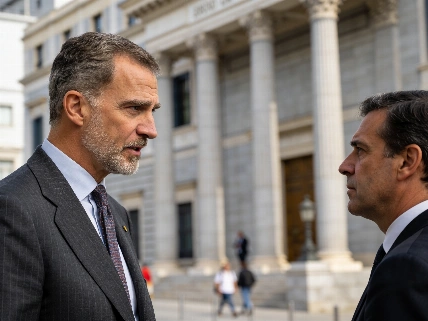
The government’s housing decrees fell in the Congress plenary session before the campaign timetable was announced. Pedro Sánchez then called general elections for 29 November 2026 after notifying the head of state.
Pedro Ruiz says Spain now faces 54 days of political convulsion. The actor and humourist argues that the confrontation between the political blocs is getting worse, and places responsibility on the country’s leaders.
In a post on X attributed to 6 October, Pedro Ruiz wrote: «Me desagrada mucho el ambiente de enfrentamiento que se recrudece ante las elecciones que vienen. Es un fracaso general de todos los políticos al mando.» The wording and attribution have not been independently verified in the available sources. The message appeared as the conflict moved beyond Congress and into the streets.
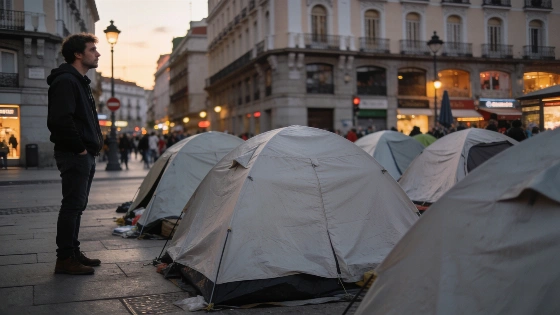
The Puerta del Sol camp grew out of a tenants’ protest linked to the attempted eviction of María Carmen Abascal, an elderly woman who had lived in her flat for about 70 years.
Spanish press reports said the People’s Party opposed the housing measures. Vox did too, as did Junts. The government’s institutional communications, published through La Moncloa, identify 29 November 2026 as the polling date.
Housing activists and organised labour are adding pressure as the campaign takes shape. The original account referred to a CCOO and UGT general strike against the PP and Vox on 11 November. Available independent material does not confirm that the unions officially called a nationwide strike on that date.
What is documented is the protest movement’s call for a “rent strike” and broader mobilisation over housing.
At Puerta del Sol, the number of tents has increased since the first ones were installed on Saturday 26 September. Antena 3 reported more than 2,000 tents in housing protests and said the action had no pre-announced end date. Whether the camp will remain when voters go to the polls is unknown.
The housing dispute has also appeared in a Madrid housing report carried in wider recent coverage. The camp has given the political conflict a fixed location in the capital.
The camp has become the subject of a legal dispute. The government’s State Attorney’s Office asked the High Court of Madrid not to dissolve it, while the regional authorities sought its temporary closure; the court declined, for the time being, to order the camp’s removal.
Businesses around the square have felt the effects. Spanish press reports described the impact of the prolonged protest as mixed, with owners raising concerns about customer traffic in the evenings and at weekends. Some linked the problem less to the camp itself than to the way the surrounding atmosphere was perceived.
Ruiz had already forecast a period of speeches and affronts before publishing his latest criticism. He did not endorse either side of the confrontation. His intervention condemned the failure of those in charge to lower the temperature.
The housing crisis has become a social mobilisation and a political liability for the government. The election campaign will run alongside the housing dispute, while possible labour mobilisation keeps the pressure on.
Ruiz’s criticism followed an escalation that has reached Congress and the streets. The record available for this account does not show that the confrontation has been reduced.