Spain's Foreign Minister confirms the death of a Spanish dual national in Colombia's earthquake. The number of unaccounted Spaniards drops to 12. Emergency aid and humanitarian teams are now active in the affected regions.
Spain's Foreign Minister, José Manuel Albares, has confirmed that a Spanish citizen with dual nationality was among the victims of the powerful earthquake that struck Colombia earlier this week. The announcement came Thursday morning, as authorities continue to assess the impact of the disaster on Spanish nationals in the region.
Albares reported that the number of Spaniards still unaccounted for in Colombia has dropped sharply from 75 to 12. He expressed condolences to the family and friends of the deceased and emphasized that both the Spanish Embassy and Consulate in Colombia remain fully operational, urging any Spaniard in the country who has not yet made contact to do so as soon as possible.
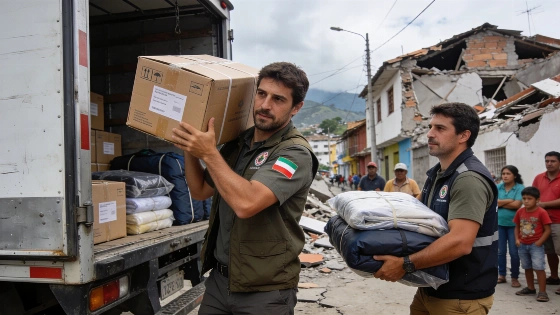
In response to the crisis, Spain has already dispatched an initial emergency aid package valued at one million euros. The shipment includes shelter materials, water and sanitation kits, and support for medical personnel working in the hardest-hit areas. Spanish authorities are coordinating closely with Colombian counterparts to ensure the aid reaches those most in need.
Colombian President Abelardo de la Espriella provided an updated toll, stating that the 7.4-magnitude earthquake in the northwest of the country has resulted in 265 deaths and nearly 3,500 injuries. The disaster has affected over 25,000 families and left almost 500 people missing. The director of Colombia's National Unit for Disaster Risk Management, David Tamayo, noted that all available resources are being mobilized for immediate response and risk management.
Humanitarian organizations have also intensified their efforts. The seven NGOs that make up the Comité de Emergencia Español have launched a joint operation in Colombia, distributing shelter and food kits, setting up mobile clinics for medical and psychosocial care, and creating safe spaces for children. Their work is focused on the most severely impacted departments, including Chocó, Risaralda, and Valle del Cauca. Teams from Acción contra el Hambre, Aldeas Infantiles SOS, Entreculturas, Médicos del Mundo, Oxfam Intermón, Plan International, and World Vision are currently assessing needs and implementing emergency plans in the worst-affected communities.
Earlier this week, a report from RUSSPAIN highlighted the initial shock and evacuations in major Colombian cities following the quake. Since then, the scale of the tragedy has become clearer, with rising casualty figures and a growing number of missing persons.
Colombia is located in a seismically active region, with several tectonic plates converging beneath its territory. Major earthquakes, while not frequent, have historically caused significant damage and loss of life. The latest event underscores the vulnerability of both local populations and foreign nationals living or traveling in the country. For Spanish citizens, the rapid response from authorities and the deployment of humanitarian aid reflect ongoing efforts to protect nationals abroad and support international disaster relief operations. The situation remains fluid as search and rescue operations continue and the full extent of the damage is assessed.