A Spanish mechanic denied permanent disability by the INSS has won a 55 percent pension after a judge ruled his chronic hand and neck conditions make his job impossible. The case exposes the gap between medical reality and administrative decisions.
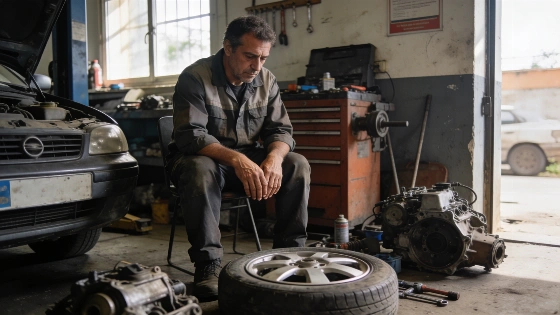
Pablo, a longtime car mechanic, spent years working through pain and stiffness in his hands and neck. Despite this, the Instituto Nacional de la Seguridad Social (INSS) twice told him he could return to work. Only after a judge reviewed his case did Pablo receive a permanent disability pension covering 55 percent of his regulatory base.
This decision reversed a string of administrative refusals, even though Pablo had medical records showing osteoarthritis in both hands and chronic neck pain. His lawyer, Marina Alaminos, argued that the INSS focused only on the diagnoses and ignored how these problems made it unsafe for Pablo to handle tools, loosen bolts, or move heavy parts—basic tasks for any mechanic.
In a 2026 case in the Balearic Islands, the court granted permanent total disability and a 55% pension to a worker after the INSS had denied his claim, emphasizing the importance of real functional limitations over formal diagnoses.
Medical evidence versus bureaucracy
Pablo’s daily life was shaped by pain, weak grip, and sudden hand lockups. Even simple repairs became risky. "He could not securely hold some tools. His hands would freeze mid-task," Alaminos said. Still, the INSS denied his request for permanent disability and rejected his appeal.
After running out of administrative options, Pablo went to court. His legal team matched each medical limitation to the core duties of his job, showing that his conditions directly affected his ability to work as a mechanic. The judge agreed, ruling that the combination of osteoarthritis and neck pain made it impossible for Pablo to do his job safely or reliably.
According to published legal commentary, the standard procedure after an INSS denial is to first complete the administrative appeal process before turning to the social courts. This multi-stage approach is confirmed by several Spanish legal sources and reflects the broader trend of judicial correction when administrative bodies overlook the real impact of medical limitations on specific professions.
Judicial correction of administrative denial
The court’s decision gives Pablo a pension equal to 55 percent of his regulatory base, which is standard for permanent total disability in Spain. The exact monthly amount depends on his salary history and was not disclosed. The ruling does not say Pablo is unable to work at all—only that he cannot continue as a mechanic. Spanish law allows people with permanent total disability to seek other jobs, as long as their limitations are respected.
Other cases in recent years have seen courts overturn INSS denials when workers show that their medical conditions prevent them from doing their usual jobs. The legal argument often comes down to connecting medical diagnoses to real workplace problems—a step that, as this case shows, is sometimes missed by administrative bodies. As noted in Spanish legal analyses, the percentage of recognized disability alone does not guarantee a pension; what matters is how the condition affects the worker’s ability to do their job.
Limits and implications
This judgment applies only to Pablo’s injuries and his work as a mechanic. It does not set a precedent for other workers or guarantee similar results in future cases. Still, the court’s reasoning highlights the need to link medical evidence to actual job requirements, not just diagnostic labels. This approach matches a recent trend in Spanish courts, which have stepped in when the INSS overlooks how functional limitations affect specific jobs, as seen in cases from the Balearic Islands and Navarre.
As reported by Talent24h, the case shows an ongoing gap between what disabled workers experience and the criteria used by social security authorities. While the INSS is responsible for protecting public funds, its strict approach can leave people with clear disabilities fighting for recognition—despite support from their doctors and colleagues.
Pablo’s story stands out not just for the final outcome, but for the resistance he faced from the system. The court only got involved because the administrative process failed to consider the real impact of his injuries. This case may push the INSS to rethink how it evaluates disability claims, focusing more on what workers can actually do. Until then, people like Pablo will have to rely on the courts to get the support they are owed.