Thousands of students in Spain are checking their inboxes as the Education Ministry starts informing applicants if they qualify for the €2,700 housing grant. The process, which affects those in Bachillerato and vocational training, now enters a crucial phase with income checks and a window for appeals in September.
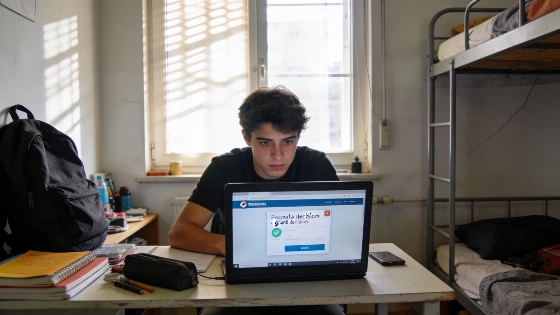
Students who applied for Spain’s general education grant are now receiving emails from the Ministry of Education, Formación Profesional y Deportes, signaling the start of the financial review for the 2026/2027 academic year. These notifications, sent in early August, direct applicants to the government’s online portal to check if their family income meets the requirements for support. However, this is only the first step—final approval will also depend on academic performance and, for some, proof of the need to live away from home.
The application window for this year’s grants ran from April 7 to May 19, with a brief extension due to technical issues. As the process moves forward, authorities are now verifying applicants’ 2025 income and family assets. The email itself does not confirm the grant; instead, students must log in to the portal to read the official notification, which outlines whether they meet the economic criteria. For families in Catalonia, the process is handled separately by the Generalitat following a recent transfer of responsibilities.
Residency Grant Details
The €2,700 figure is not the total value of the grant, but the fixed amount awarded to students who must move away from home for their studies. This applies to those enrolled full-time in Bachillerato, intermediate or higher vocational training, and certain arts, sports, or religious programs. To qualify, students must prove that commuting from home is impractical due to distance, transport, or class schedules. The grant cannot exceed the actual cost of accommodation, and is not available for basic vocational training, language schools, or access courses, where only the basic and minimum variable grants may apply.
Eligibility for the residency component is also tied to income thresholds. Only students whose family income falls within the first or second bracket can receive this support; those in the third bracket are excluded. The grant structure includes several components: €1,700 for those within the lowest income threshold, €2,700 for justified residency change, a basic grant of €300 (or €350 for basic vocational training), an academic excellence bonus of €50–€125, and a variable amount starting at €60, depending on family income and academic record.
How Income and Academic Criteria Interact
The final grant amount is a combination of eligible components. Students in the lowest income bracket can receive both the €1,700 income-linked grant and the residency allowance, plus bonuses for excellence and variable amounts if they qualify. In the second bracket, the income-linked grant is replaced by the basic grant, but the two cannot be combined. The third bracket only allows for the basic grant and, if applicable, the excellence bonus. For a family of four, the income thresholds are set at €22,107 (bracket one), €38,242 (bracket two), and €40,773 (bracket three).
Academic requirements also apply. First-year Bachillerato students must have an average grade of at least five and not repeat the year. For higher vocational training, a minimum grade of five in the entry pathway is required. Students with disabilities, autism spectrum disorders, severe behavioral issues, or high abilities should apply for specific educational support grants, which remain open until September 10.
Appeals and Corrections in September
From September 7 to 28, applicants can submit appeals, provide additional documents, or update academic information, including changing their bank account or study program. This period is especially important for those who did not know their final enrollment details when they first applied. All corrections must follow the instructions in the electronic notification.
While the grant process is a lifeline for many families, it also highlights the broader issue of income disparities in Spain. Stories like that of a Bolivian construction worker, who found his earnings in Spain far outpaced those back home, underscore the financial pressures and opportunities that shape educational and career choices. For more on how income differences impact migrants and their families, see this report on wage gaps between Spain and Bolivia.