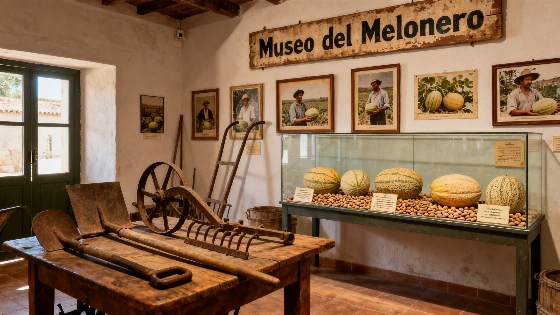
At the Museo del Melonero in Villaconejos, the focus isn’t on displaying melons, but on honoring the families who made the fruit famous. Director Fernando Agudo explains how history, war, and tradition shaped the real piel de sapo—and why most supermarket melons aren’t the originals.
Visitors to the Museo del Melonero in Villaconejos might expect to find rows of melons on display. Instead, they discover a museum dedicated to the people who built the region’s reputation for exceptional fruit. Fernando Agudo, the museum’s director and founder, made this clear on the program Herrera en COPE: “There are no melons in the museum—what we have is the history of the melon growers of Villaconejos.”
The story behind Villaconejos’ melons is woven from family tradition, Madrid’s bustling markets, and even a chapter of military history in Africa. Agudo’s own family has cultivated melons for generations, shaping the museum’s focus on the lives and struggles of local growers rather than the fruit itself. The museum preserves the memory of those who worked the land, often under tough conditions, to create a legacy that still resonates in Spain’s food culture.
Centuries of Melon Tradition
According to Agudo, the connection between Villaconejos and melons dates back to at least the late 16th or early 17th century. Historical records mention the sale of Villaconejos melons in Madrid’s Plaza de la Cebada, alongside local delicacies like gallinejas and mantas. This early reference shows that the town’s name was already synonymous with quality melons long before supermarkets and modern branding.
Seeds from Africa: A Turning Point
One of the most remarkable episodes in the town’s melon history involves the war in Africa. Agudo recounts how a soldier stationed there encountered a different kind of melon—dark-skinned and elongated. He brought a handful of seeds back to Villaconejos, and over time, these African varieties flourished. Their unique qualities quickly gained fame in Madrid, turning a chance wartime discovery into a cornerstone of the region’s agricultural identity.
The Real Piel de Sapo vs. Modern Hybrids
Today, Villaconejos is closely associated with the piel de sapo melon. But Agudo insists that the original fruit was quite different from what’s commonly sold under that name. The authentic piel de sapo was a local variety, weighing around 2.5 kilos, with small seeds and a distinct sweetness. “Our sapo is different,” Agudo explains, emphasizing that most melons now marketed as piel de sapo are actually hybrids. He singles out the mochuelo variety as the finest, though it’s rarely grown due to its fragility.
How to Choose a Good Watermelon
While many shoppers are on the hunt for the perfect melon, local grower José Manuel Ruiz shared practical advice for picking a quality watermelon on Fin de Semana with Cristina López Schlichting. Ruiz recommends looking for a watermelon that feels heavy for its size, sounds solid (not hollow or “like cardboard”) when tapped, and has a vibrant green color. The yellow patch on the rind, often misunderstood as a flaw, is simply where the fruit rested on the ground and is a sign of natural ripening.
In short, a good watermelon should be dark, weighty, and produce a dense sound when gently knocked. The yellow spot is not a defect but a mark of authenticity.
The Museo del Melonero stands as a reminder that the story of Spain’s most famous melons is as much about the people and their ingenuity as it is about the fruit itself. For those interested in the roots of Spanish food culture, Villaconejos offers a window into a tradition shaped by history, migration, and the quiet persistence of local families.