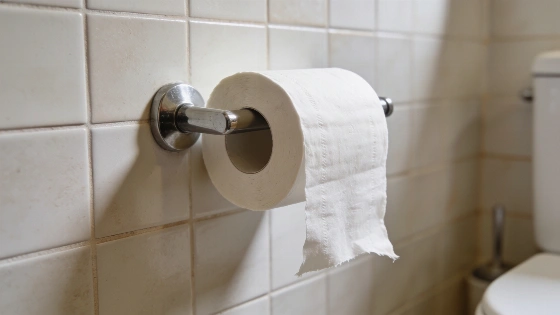
A 19th-century patent drawing by Seth Wheeler appears to favor the 'over' method for hanging toilet paper, but modern hygiene guidelines focus on handwashing, not roll orientation. The debate continues, with practical and sanitary arguments on both sides.
When Seth Wheeler registered his now-famous toilet paper patent in 1891, the drawing showed the paper hanging over the front of the roll. This single image has fueled a debate that still resurfaces today: should toilet paper be placed 'over' or 'under'?
The U.S. patent 465,588, granted to Wheeler on December 22, 1891, is often cited as proof that the 'over' position is correct. However, the patent itself was designed to protect a system of partially separated sheets, not to dictate hygiene standards. The document describes serrated edges and a method for easily tearing off sheets, but it never mentions bacteria, wall contamination, or infection prevention. The illustration simply reflects how Wheeler envisioned his invention, not a universal rule for bathrooms.
The Patent’s Real Message
Wheeler’s patent drawing clearly shows the paper hanging over the front, making the end easy to find and grasp. The technical description focuses on the mechanics: lateral incisions, tight joins between sheets, and serrations to help users locate the edge. Nowhere does it claim that this orientation is more hygienic or safer. Using the patent as a historical reference is accurate, but treating it as a medical guideline is a stretch.
Why 'Over' Might Be More Convenient
Supporters of the 'over' method point to practical benefits. The end of the roll is visible and easier to grab, often staying away from the wall. Christian Moro, associate professor of biomedical sciences at Bond University, notes that this can reduce accidental contact with the wall—a minor but real consideration for hygiene. For people with limited mobility or dexterity, the 'over' position can make daily life easier. It also allows users to see how much paper remains. However, the impact depends on the type of holder and the space between the roll and the wall. In some Spanish homes, bidet showers or other hygiene solutions are used alongside toilet paper, but none of these factors make 'over' the only correct choice.
The Case for 'Under'
Advocates for the 'under' position argue that it lets users pull the paper with one hand while touching less of the exposed roll. Primrose Freestone, a clinical microbiology specialist at the University of Leicester, has highlighted this point. Others counter that searching for the end behind the roll can bring fingers or paper closer to the wall, potentially increasing contact with contaminated surfaces. No experimental studies directly compare the two methods. Research does show that bathroom surfaces can harbor microbes, but there is no evidence that one orientation is safer than the other. In homes with young children or pets, the 'under' method can make it harder for them to unroll the paper—an advantage for some families.
Handwashing Matters Most
Modern hygiene guidelines, including those updated by the World Health Organization in 2025, emphasize handwashing after using the toilet as the key to preventing the spread of germs. The Spanish Ministry of Health also stresses that proper hand hygiene reduces the risk of transmission. Neither organization specifies how toilet paper should be hung. A recent study in Scientific Reports visualized how toilet flushes can send aerosols up to 1.5 meters in seconds, but did not examine toilet paper orientation. The main advice: keep the holder clean, avoid letting the paper touch surfaces, and always wash your hands thoroughly.
Some viral household tips, like using orange peels in the toilet, have also circulated online, but experts agree that nothing replaces proper cleaning. The 'over' method may be more accessible, while 'under' can be practical for families with children or pets. Ultimately, the choice comes down to personal preference and bathroom setup.
Debates over household habits are nothing new. As seen in discussions about laundry hacks—such as the viral aluminum foil trick covered in this earlier report—experts often remind us that convenience and hygiene are not always the same thing. In the end, the most important factor remains what happens after you reach for the roll: washing your hands.