Donald Trump has accused Spain of losing control at its border after the mass entry of migrants in Ceuta. The US president links the crisis to Madrid’s refusal to boost defense spending. Tensions between the two governments are escalating.
Donald Trump has renewed tensions with Spain by publicly criticizing the government’s response to the Ceuta border crisis and claiming the country has "zero control" over its frontiers. In a late-night post on his social network, the US president called the situation "very sad," referring to the mass arrival of migrants from Morocco at the end of July. His comments come as relations between Washington and Madrid remain strained over defense policy and military cooperation.
Trump continued his criticism in an interview with GB News, a British channel with a right-wing audience. He repeated his claim that Spain is not meeting its NATO commitments, singling out the country as the only NATO member refusing to raise defense spending to 5%. He warned that Spain risks economic trouble if it does not change course. Trump also voiced frustration over Spain’s refusal to allow US use of the Rota and Morón bases for operations related to Iran, and over Madrid’s stance on Israel’s actions in Gaza.
Spanish Prime Minister Pedro Sánchez has publicly stated that the government has no evidence Morocco orchestrated the July migrant surge in Ceuta, and that neither Spanish nor partner intelligence services have found proof of Moroccan involvement.
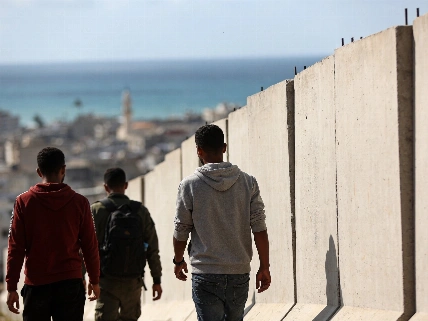
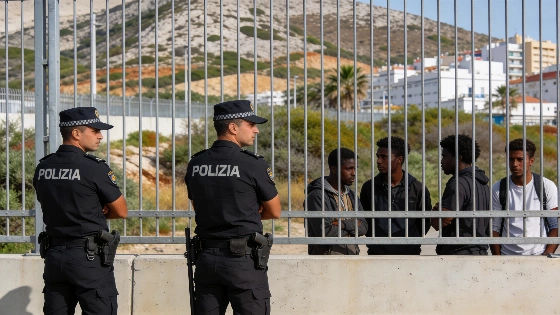
The Ceuta incident, which saw more than 70,000 migrants cross from Morocco in a few days, has become a flashpoint in the diplomatic standoff. However, Reuters and other major outlets report that official Spanish figures estimate over 10,000 migrants, including at least 1,200 minors, remained in Ceuta weeks after the initial influx. Many are living in makeshift camps or on the streets. While most who entered have since returned, more than 5,000 remain in the city waiting for decisions on asylum or deportation. Local authorities are struggling to manage the situation as pressure grows on the Spanish government to act. The crisis has already led to legal scrutiny and political fallout, as detailed in a previous investigation.
Trump’s remarks fit a familiar pattern: when he finds a message that resonates, he repeats it across different platforms to amplify its effect. His approach to Spain is notably different from his relationship with Morocco’s King Mohamed VI. Trump’s recognition of Moroccan sovereignty over Western Sahara in 2020 strengthened ties, and Morocco has since named a major road after him. The route connects southern Morocco to the port of Dajla in Western Sahara and is central to Morocco’s economic plans in the region.
Trump often points to his own record on the US-Mexico border, claiming illegal crossings dropped to "practically zero," and uses the Ceuta crisis as an example of what he sees as Spain’s failure to secure its borders. His repeated attacks on Pedro Sánchez’s government go beyond migration—they are part of a strategy to pressure Spain on defense, NATO, and Middle East policy. Trump’s approach is to use high-profile incidents to push allies toward Washington’s priorities, even if it means escalating public disputes. For Spain, the cost of this strategy is rising, both internationally and at home.
In response to the crisis, Spain announced an emergency aid package for Ceuta totaling 168 million euros—about 8% of the enclave's GDP—on top of a previously promised 180 million euros. The government also plans to create 6,000 places in reception centers for temporary accommodation and status checks, signaling a shift toward longer-term administrative processing rather than rapid returns.