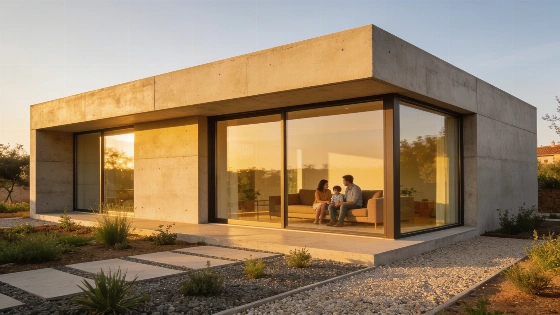
Concrete prefab homes are gaining ground in Spain as a durable, efficient, and customizable housing solution. Architect Antonio Guerra reveals why these structures can retain their architectural value and visual appeal for decades, challenging old stereotypes about prefab living.
When architect Antonio Guerra steps onto a new building site, he knows the question is coming: how long will a concrete prefab home really last? For Guerra, CEO of Alarife Arquitectos and collaborator with The Concrete Home, the answer is clear—these houses are designed to look and feel as fresh in 60 years as they do on day one.
Prefab homes in Spain have moved from niche curiosity to a serious option for families seeking efficiency, speed, and design flexibility. Guerra points to the rapid construction timelines and the ability to tailor layouts to each family's needs as key reasons for their rising popularity. But longevity, he argues, is where concrete prefab truly stands apart.
Built to Endure
At the heart of this durability is the architectural concrete panel. Guerra explains that this material, rooted in the rationalist movement of the 1920s, has proven its resilience over a century of use. Unlike fleeting trends, the style and substance of these panels have stood the test of time. "In 60 years, this building will be just as vibrant as it is today," he says.
Compared to traditional construction, concrete prefab homes maintain a cleaner, more contemporary appearance and resist the visual aging that plagues many older houses. Guerra notes that while homes from the 1970s often look dated, well-designed prefab structures remain relevant and attractive for generations.
Personalization Without Compromise
One persistent myth is that prefab means uniformity. Guerra is quick to dismiss this: industrialization, he insists, does not mean identical homes. Each project is shaped by the real needs of its owners—budget, layout, size, and function are all up for discussion. The design process starts with the family's unique situation, not a fixed catalog.
He likens it to crafting a mug for each person, with the handle perfectly fitted to their fingers. Every prefab home presents a new technical challenge, ensuring that no two are ever truly alike.
Energy Efficiency as Standard
Energy performance is another decisive factor. Guerra says their projects consistently achieve the highest energy rating—class A—helping families cut both consumption and costs. While environmental concerns remain important, he observes that most buyers today are focused on controlling energy bills and ensuring year-round comfort.
Specialization in prefab construction has also driven quality improvements. As companies refine their processes with each project, errors decrease and the overall system becomes more robust.
Changing the Way Spain Lives
This shift in housing priorities echoes broader changes in Spanish living. As homes become more adaptable and efficient, furniture and interior design are evolving too. For example, the rise of foldable desks and space-saving solutions, as explored in a recent look at how compact furniture is transforming home workspaces, highlights how modern families are rethinking every aspect of their living environment.
Ultimately, Guerra's vision reflects a new era for Spanish housing: prefab homes are no longer just a shortcut to faster construction. They are a long-term investment—durable, efficient, and tailored to the people who live in them, ready to hold their value for decades to come.