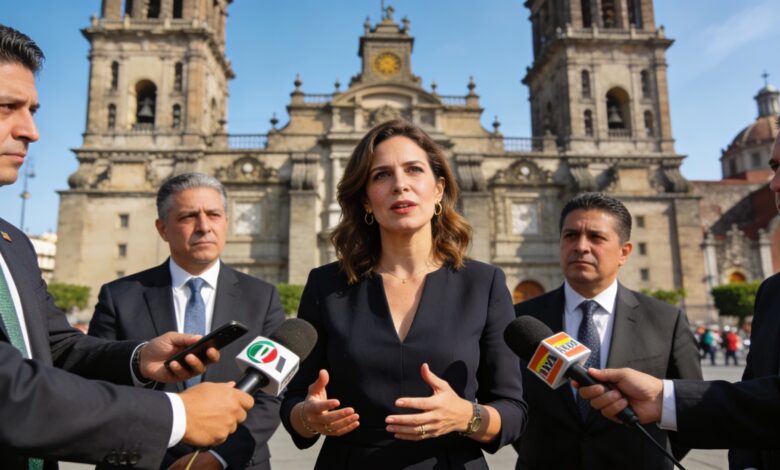
On Sunday, Madrid President Ayuso arrived in Mexico on an official visit that immediately became the center of political controversy. In recent months, she has repeatedly referred to Mexico as a ‘narco-state’ and accused the country’s president, Claudia Sheinbaum, of dictatorial methods and far-left views. These statements sparked considerable reaction in both countries and prompted a public response from Mexican authorities.
As part of her 10-day trip, Ayuso plans to visit four cities and hold meetings with the management of major companies, including Cemex and Alsea. Particular attention was drawn to her participation in a memorial ceremony for Hernán Cortés at Mexico City’s cathedral. This step is seen as a political gesture: Ayuso openly supports the position that Spanish colonization brought not only destruction but also the development of education, legislation, and protection of the indigenous population. She also consistently refuses to acknowledge the need for Spain to offer official apologies to Mexico for the events of the 16th century, despite longstanding demands from Mexican leaders.
The issue of historical responsibility remains a subject of debate between the countries. Former Mexican President López Obrador, back in 2019, sent a letter to the Spanish government requesting recognition of the crimes committed during Cortés’ conquest, but received no response. The new president, Claudia Sheinbaum, continues her predecessor’s policy, and Morena, the party founded by Obrador, maintains a high level of popular support. At the same time, Ayuso and her supporters in the Partido Popular believe that Spain should not make concessions on issues of historical memory.
Ayuso’s rhetoric towards leftist governments in Latin America is becoming increasingly harsh. She uses similar language when addressing the authorities of Colombia and Brazil, which escalates tensions in international relations. In Mexico, her statements provoked irritation: Claudia Sheinbaum responded publicly to her provocative words with clear disdain. Within Spain itself, such approaches to historical issues have already been the subject of discussion, as seen in the case of the joint Spanish-Mexican initiative to rethink their shared past — details about it are available here.
The question of how to spell the country’s name has also become a symbolic element of the dispute: Ayuso continues to use the “Mejico” variant with a “j,” despite the fact that both in Mexico itself and according to recommendations from the RAE, the spelling with an “x”—“Mexico”—is standard, reflecting the Nahuatl origin of the word. This linguistic nuance highlights the depth of disagreement not only in politics but also in the perception of cultural heritage.