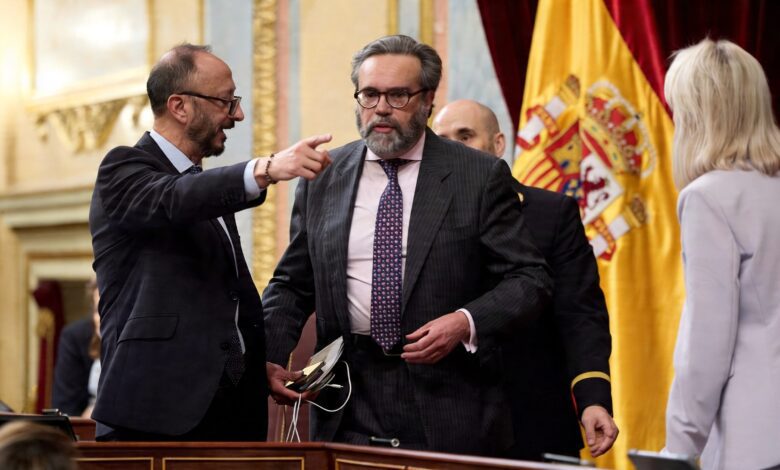
A controversy has erupted in Madrid over disciplinary measures against Vox deputy José María Sánchez, who last week publicly insulted the acting Speaker of Congress directly from the podium. Despite demands from the Socialists to extend his suspension for at least a month, Sánchez will return to his seat in the chamber as early as Tuesday. As El Pais notes, the current regulations do not provide for tougher sanctions for this kind of behavior, and legal precedents limit the options available to parliamentary leadership.
Regulatory limitations
Attempts to impose harsher punishment on the Vox deputy have faced legal obstacles. The internal rules of Congress do not contain clear provisions for such cases, and rulings by the Constitutional Court on similar situations in regional parliaments protect the rights of deputies even in cases of misconduct. In particular, the court does not consider rude behavior or verbal altercations grounds for maximum sanctions unless there was a direct threat to safety or a serious disruption of proceedings.
Reaction of factions and details of the incident
The incident involving José María Sánchez sparked a sharp reaction from members of the PSOE and the government. In their view, the Vox deputy’s actions were not only disrespectful but also threatening. During the session, Sánchez approached the podium without permission to protest after a verbal altercation with an ERC deputy. Interim President Alfonso Rodríguez Gómez de Celis demanded three times that he leave the speaking area, after which Sánchez was escorted out as required by regulations. However, the question of imposing additional sanctions stirred debate: Vox accused the leadership of bias, while some PP deputies preferred not to escalate the conflict, although some supported the Socialists’ position.
Judicial precedents and regional experience
The history of Spanish parliaments has already seen similar cases. For example, in 1993, in the Galician parliament, José Manuel Beiras was suspended for refusing to stop speaking, but the Constitutional Court deemed the month-long suspension excessive, as there was no evidence of an exceptional violation. Similar rulings were made in cases in Madrid and Cantabria: courts emphasized that punishment must be proportionate and applied only in truly serious violations. In one recent case, when a Podemos deputy in Murcia was suspended for a month for refusing to leave the chamber, the Constitutional Court did not support his appeal, and the case reached European bodies.
Problems with the current regulations
According to experts, the formal mechanisms established in parliamentary regulations during the early transition to democracy functioned for a long time thanks to adherence to ethics and tradition. However, in recent years, amid rising tensions and conflicts, these tools have proven insufficient. Specialists note that there is now discussion about the possibility of introducing new forms of arbitration, similar to the British institution of the Sergeant at Arms, in order to increase the effectiveness of disciplinary measures.
The question of how and when strict sanctions can be applied to deputies remains unresolved. According to El Pais, the Congress leadership consulted with lawyers and studied the experience of regional parliaments, but concluded that it is impossible to expand the punishment for José María Sánchez without changing the regulations. This situation is reminiscent of other high-profile disputes in Spanish politics, when legal constraints prevent timely responses to challenges—as was the case, for example, in the corruption scandal involving the prime minister’s wife, which was recently detailed in a report by RUSSPAIN.