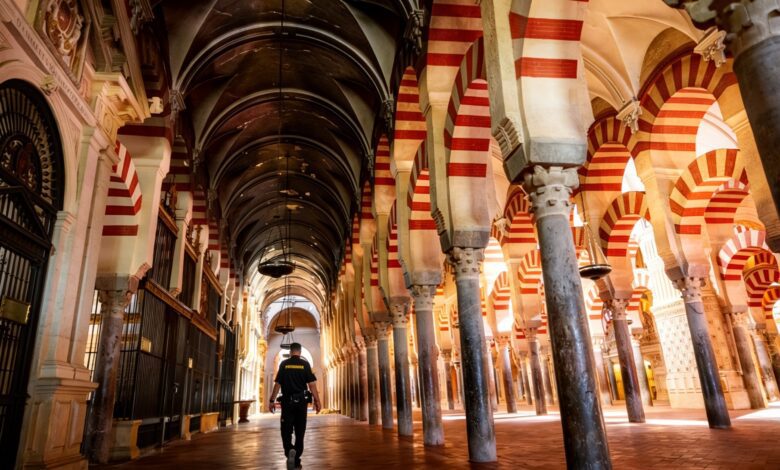
A new audio guide for the Mezquita has been launched in Cordoba, offering visitors an alternative perspective on the history of this famous monument. Unlike the official church version, this project highlights the Andalusian roots of the building and contentious aspects of its management. The initiative comes from the ‘Plataforma Mezquita-Catedral’ platform, which advocates for preserving the public character of the site and has already announced plans to translate the audio guide into English and French.
The conflict over history
The main feature of the new audio guide is its emphasis on historical details that, according to the authors, are often overlooked in official tours. In particular, it covers events of the 16th century, when, after the Christian conquest of Cordoba, large-scale reconstruction began in the Mezquita building. At that time, the city authorities opposed the church’s plans to build a new cathedral inside the mosque, stressing its uniqueness and demanding the queen’s permission. The audio guide notes that it was only the intervention of Queen Isabella at the end of the 15th century that made it possible to preserve most of the original structure.
Controversy over ownership
A separate chapter of the audio guide discusses the church’s attempts to change the perception of the monument by removing the word ‘Mezquita’ from its name and registering it as ‘Santa Iglesia Catedral de Córdoba’ in 2006. The project’s authors claim the church took advantage of changes in property law to formalize ownership rights, even though, according to them, the state never officially transferred the title of owner. After legislative changes in 2015, the opportunity to challenge this registration was lost.
Reaction and tour details
According to the platform, the new audio guide consists of ten chapters, an introduction, and a bonus with the text of the UNESCO decision to include the Mezquita on the World Heritage list. In total, the tour lasts just over 50 minutes and covers not only the key stages of history but also little-known facts. Among them are the story of the mihrab of Al-Hakam II, hidden for four centuries, and the reasons why most of the arches in the Patio de los Naranjos were closed by decision of the bishops.
In 2024, the organization World Heritage Watch, which advises UNESCO, expressed concern that church authorities emphasize only the Catholic aspect of the monument, disregarding its artistic and historical value. Representatives of the platform believe that such a policy distorts the perception of the Mezquita and its role in the city’s history.