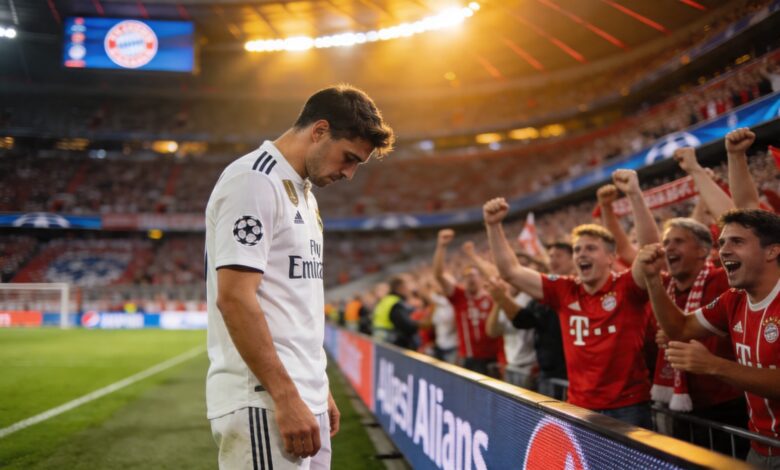
Real Madrid’s defeat in Munich became one of the most talked-about events of the week among Spanish fans. The team lost its chance to compete for a sixteenth title after a controversial referee decision, sparking outrage among the players and coaching staff. For Spanish football, such episodes prompt discussions not only about sports but also about reputational consequences, as similar situations affect trust in refereeing and shape attitudes toward Spanish clubs on the European stage.
The main focus was on Camavinga’s sending-off, which many believe became the turning point of the match. Analyzing the game, Arbeloa noted that the team found itself at a disadvantage due to the referee’s decision, which he described as inexplicable and unfair. According to him, after this moment, the team’s chances to keep fighting almost vanished, and the players’ efforts were undone by a single whistle. The atmosphere in the locker room was filled with disappointment and frustration, as the players had given their all to achieve a result.
Tactics and attitude
Arbeloa emphasized that he chose the lineup based on the need to attack and impose their style on the opponent. He did not opt for caution, preferring instead to field players capable of handling Bayern’s aggressive pressing. In his view, the chosen strategy was justified, and he would not change his choice even now. Each player showed character and resilience, despite the pressure and difficult circumstances.
In the second half, after the team was left with ten men, the task became more difficult. Real Madrid tried to capitalize on rare chances near the opponent’s goal, but failed to convert them. Arbeloa noted that in such matches, precision and composure during key attacking moments are crucial. However, despite their efforts, the result did not favor the Madrid side.
Reaction and emotions
After the final whistle, the team’s mood was subdued. The players felt a sense of injustice and anger over how events unfolded on the pitch. Arbeloa thanked the fans who supported the team both at the stadium and at home. He also stressed that he would have preferred Bayern to win fairly, without controversial decisions that leave an unpleasant aftertaste.
The coach drew attention to the referee’s actions, suggesting he may not have realized he had shown a second yellow card. According to Arbeloa, such errors are unacceptable at this level, especially when the outcome of key matches in the season is at stake. He added that the coach is always responsible for a defeat, but in this case, the result was largely determined by external circumstances.
Future and conclusions
Arbeloa stated that he is not concerned about his future at the club and fully trusts the management. For him, the success of Real Madrid matters more than personal ambitions. He emphasized that he has always tried to help the team and will continue to do so until his last day at work. The question of continuing cooperation remains open, but the coach is ready to accept any decision by the club.
Spanish media continue to discuss the consequences of this match for Real Madrid. Analysts note that such episodes could influence the club’s future strategy and its attitude toward refereeing in European tournaments. Recalling recent changes in the squad and tactics, many compare the situation to previous matches, when unexpected decisions by coaches or referees altered the course of the season. For example, in one of the past encounters with Bayern Munich, lineup changes also became a hot topic among experts and fans.
In recent years, Spanish clubs have repeatedly faced controversial refereeing decisions in European competitions. For example, in the 2024/25 season, a similar incident involved another Spanish team when the sending off of a key player away from home virtually wiped out their chances of progressing to the next round. At the time, the debate focused not only on the specific incident, but also on the need to reform the video review system and improve referee training. Such cases highlight the importance of transparency and professionalism in officiating, especially in matches where prestige and significant financial interests are at stake.