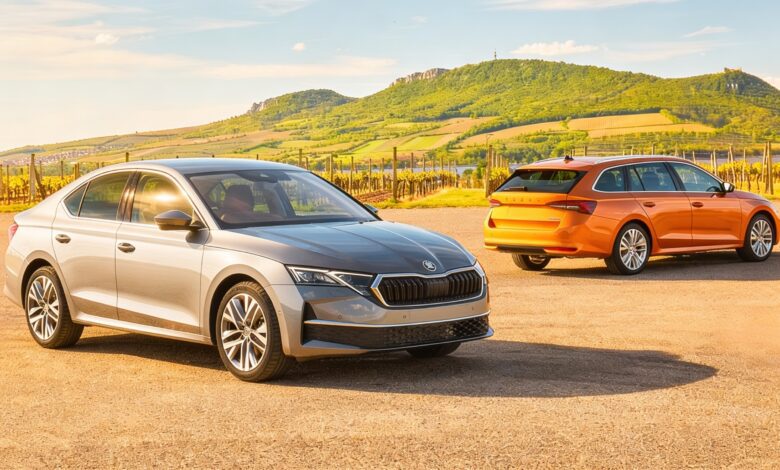
The sedan segment, long considered an outsider amid the dominance of SUVs, is unexpectedly coming back into focus for car manufacturers. The reason lies not only in rising crossover prices, but also in the tightening of environmental standards—particularly relevant for European and Spanish markets. In recent years, SUVs have shaped the sales structure: in Spain, they accounted for up to 60% of new registrations, with more than 650,000 such vehicles sold in 2025. However, a shift is currently underway that could change the balance of power in the country’s car dealerships.
Trend shift: Sedans are back in the game
In the US, the first quarter of 2026 was a milestone for Toyota: the Camry, a classic midsize sedan, surpassed not only its direct competitors but also Toyota’s flagship RAV4 crossover in sales for the first time in nearly a decade. The Camry recorded 78,255 units sold, up 11.3% year-on-year, while the RAV4 saw a drop of almost 50%—mainly due to a generational change. Although the US market situation does not always mirror Spain directly, this signal has not gone unnoticed by European and Japanese brands operating on the Iberian Peninsula.
According to Auto News, it is the rising cost of SUVs that forces companies like Ford, Nissan, and Stellantis to reconsider their product lines. Executives note that demand for sedans has not disappeared—manufacturers simply could not find a way to make them profitable. Now, as consumers increasingly look for more affordable and economical options, traditional body styles are making a comeback. In particular, Nissan representatives see sedans as an opportunity to return to the brand’s roots, while Stellantis highlights growing interest in compact and personal vehicles that are easier to park and cheaper to maintain.
Economy and environment: new arguments in favor of sedans
Rising prices for SUVs are not the only factor influencing brand strategies. Crossovers are heavier and less aerodynamic, which directly affects fuel consumption and emissions. As the European Union prepares to introduce the Euro 7 standard in 2027 and emission requirements become increasingly stringent, it is getting harder for manufacturers to keep ICE SUVs in their lineups without risking fines. Sedans, on the other hand, make it easier to meet regulations: they are lighter, more economical, and often cheaper to produce.
For the Spanish market, this could mean the return of a broader selection in the segment of traditional three-box models. Sedans can offer a spacious interior and a roomy trunk at a lower price than similarly sized crossovers. This is especially important for buyers seeking practicality and savings, but unwilling to overpay for a trendy body style. Additionally, for brands, it is a chance to maintain sales of combustion-engine cars without violating new environmental regulations.
Spanish Market: Expectations and Prospects
Although the share of sedans in Spain has significantly declined in recent years, interest in them has not disappeared completely. Many brands have removed such models from their lineups, but now the situation may change. If the trend towards more expensive SUVs continues and environmental standards get even stricter, sedans will have a chance at a comeback. In this context, it is particularly interesting to watch Toyota’s strategy, which has already demonstrated that the Camry can compete even with the most popular crossovers.
A similar shift recently took place in the coupe segment: the return of the Honda Prelude with a hybrid powertrain and its focus on the Spanish market became a notable event, which was discussed in detail in the article about the return of the Honda Prelude 2026. This confirms that manufacturers are increasingly looking for new formats for traditional body styles to adapt to changing customer expectations and regulatory requirements.
For Spanish car enthusiasts, the return of sedans may become not just a nostalgic nod to the classics, but also a real alternative amid rising prices and stricter standards. Final decisions by brands will depend on demand trends and their ability to offer competitive models, but the very fact of renewed interest in sedans is already reshaping the market landscape.