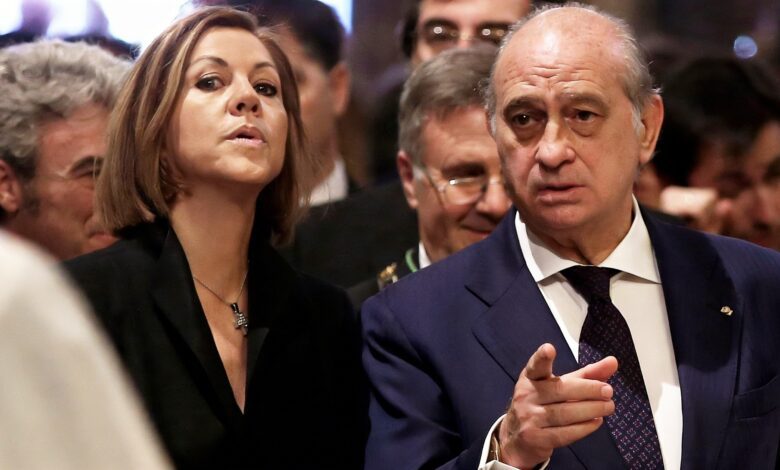
The court ruling in the Kitchen case has become one of the most widely discussed events in Spain, as it determines who will be held accountable for one of the country’s largest political operations of the past decade. The decision to limit the investigation to former Ministry of the Interior and police officers has raised questions about the transparency and thoroughness of the judicial process. For Spaniards, this means that many details, particularly those involving possible involvement of high-ranking party officials, will remain unanswered, and the consequences for the political system could be long-lasting.
The beginning of the investigation
In January 2009, as the Gürtel case investigation was just gathering momentum, meetings between key figures were already taking place out of the public eye. As reported by El Pais, commissioner José Manuel Villarejo documented in his notes contacts with representatives of Partido Popular, including Ignacio López del Hierro, the husband of the party’s then secretary general. Discussions at that time centered around obtaining information for decision-making at the highest level. These events preceded the first arrests in the Gürtel case, indicating that the party was already actively trying to control the investigation.
In the following years, according to El Pais, Villarejo continued to provide confidential information to PP representatives. His records and audio tapes indicate that manipulations and attempts to influence the course of the case began long before the party came to power and gained control of the Interior Ministry. It was during this period, in 2013, that Operation Kitchen was launched—an unauthorized surveillance operation against former party treasurer Luis Bárcenas, aimed at seizing compromising materials that could have influenced the Gürtel investigation.
Court restrictions
The trial for the Kitchen case began in April 2026 at the Audiencia Nacional. Only former Interior Ministry and police officials, including ex-minister Jorge Fernández Díaz, were in the dock. The court set clear limits: any attempts to extend the investigation to the PP’s political leadership were rejected. Although the possible involvement of María Dolores de Cospedal and other senior officials was raised repeatedly during the investigation, Judge Manuel García-Castellón determined there was insufficient evidence to bring them to account.
Attempts by PSOE representatives to return the case to the investigation phase and expand the list of defendants were unsuccessful. Judge Teresa Palacios emphasized that any new charges should only be considered as part of a separate investigation, not the current proceedings. Even the prosecutor’s office, despite suspicions of broader involvement, acknowledged that the court lacked authority to review the line-up of defendants at this stage.
Unexamined episodes
The Kitchen case is complicated by the fact that many episodes involving attempts to pressure lawyers and destroy evidence were left unexamined. For instance, the investigation into possible pressure on lawyer Javier Gómez de Liaño was closed due to insufficient evidence. The so-called SMP project, which prosecutors said aimed to completely eliminate the Gürtel case and was valued at 15 million euros, was also not thoroughly investigated. This project was linked to lawyer Ignacio Peláez, who, according to Bárcenas, offered him options to terminate the case.
Another episode—the attack on Bárcenas’s family by a man disguised as a priest—was also not recognized as related to Operation Kitchen. Investigators found no evidence of coordination between this attack and police actions or the involvement of other organizations. Prosecutors sought a more thorough investigation of these events, but the judge again refused to expand the case.
Impact on the political system
Limiting the investigation to former officials of the Interior Ministry and police sparked a wave of criticism from the opposition and the public. Many argue that without examining the political aspect, it is impossible to understand the full picture. As El Pais reports, attempts by prosecutors and the prosecution to have the case reviewed after new Villarejo audio recordings were published led nowhere—judges ruled the material was not convincing enough.
In Spain, court decisions like these have repeatedly sparked public debate. For example, in the economic sector, the sharp changes in salaries and working conditions in construction also triggered disputes over transparency and fairness, as recently discussed in a report on wage growth in construction and labor shortages according to russpain.com. Such parallels show that issues of accountability and transparency remain relevant across different sectors of the country’s life.
In recent years, Spain has faced several high-profile investigations involving corruption and abuse of power. The Gürtel case became one of the largest, leading to significant changes in the political landscape. Operation Kitchen, in turn, demonstrated how challenging it can be to hold not only perpetrators but also potential high-level organizers accountable. Such proceedings are often accompanied by attempts to limit the circle of accused and minimize political fallout. As a result, many questions remain unanswered, and public trust in institutions continues to be tested.