In Canberra, students and teachers transformed over 2,000 plastic bottles into a functional greenhouse, turning waste into a hands-on science and gardening space. The project, first completed in 2015, is sparking renewed interest as schools seek creative ways to teach sustainability.
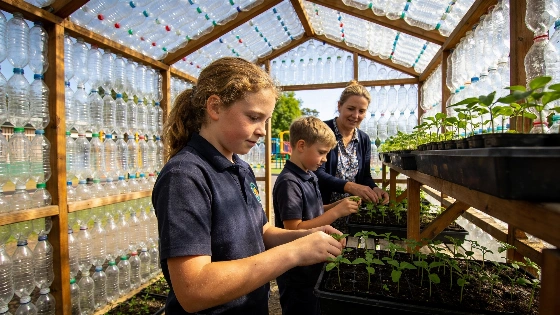
At Richardson Primary School in southern Canberra, a group of students and teachers took on a challenge that would reshape their schoolyard—and their approach to sustainability. By collecting and repurposing more than 2,000 plastic bottles, the school community constructed a full-sized greenhouse, known as the 'Plastic Palace', that continues to draw attention more than a decade after its completion.
The initiative began in 2015, when teacher Kate Davis and her third-grade class started planning a greenhouse built entirely from discarded bottles. Over the next several years, as the students advanced through school, the project grew in scale. By the time the structure was finished, it was large enough to accommodate an entire class, with walls and roof made almost entirely from bottles gathered by families and staff. The process not only involved collecting materials, but also engaging students in design decisions and hands-on construction.
From Waste to Learning Space
The 'Plastic Palace' was designed to serve as both a greenhouse for seedlings and a classroom for science experiments. Students used the space to germinate plants destined for the school garden, monitor growth, and conduct small-scale scientific projects. The interior shelving allowed for organized storage of pots, seeds, and classroom materials, making the greenhouse a practical extension of the school’s curriculum.
Funding for the project came in part from a 2,000 Australian dollar grant from the Teachers Mutual Bank Environment Fund, which covered additional construction materials. Even the cut-off bases of the bottles found new life as containers for young plants. The opening ceremony drew the attention of local officials, including Education Minister Joy Burch, highlighting the project’s role in promoting environmental awareness.
How the Greenhouse Was Built
Building the greenhouse required careful planning and teamwork. Clean, label-free bottles were collected, their bases removed, and then threaded onto bamboo canes to form vertical columns. These columns were attached to wooden frames, creating the walls and roof. The structure relied on sturdy posts, screws, and hinges to ensure stability, with adult supervision required for the more technical tasks. According to REAP, a similar greenhouse measuring 1.8 by 2.4 meters would typically use around 1,500 bottles, underscoring the scale of Richardson’s project.
While the plastic bottles provided insulation and protection, they did not offer the same level of climate control as professional greenhouses. The design allowed for a protected environment suitable for starting seedlings and conducting experiments, but did not guarantee year-round cultivation of all plant species. Recommendations from organizations like Scouts suggest adding bubble wrap for extra insulation and tailoring crops to seasonal conditions.
Impact and Limitations
The original documentation of the 'Plastic Palace' makes clear that its primary functions were educational and practical, rather than commercial. Students were responsible for caring for the plants and transferring them to the outdoor garden once established. The project offered a tangible way for children to observe the full cycle of food production, from seed to harvest, within the school grounds.
However, there is no evidence that the greenhouse could support continuous, professional-level cultivation. Its effectiveness depended on local climate, orientation, and construction quality. No official data was published on temperature regulation, crop yields, or the long-term durability of the materials. Still, the project stands as a documented example of community-driven reuse with real educational value.
Why the Story Matters Now
Interest in the 'Plastic Palace' has resurfaced in 2026, as schools and communities revisit creative solutions for plastic waste and environmental education. The project’s renewed relevance lies in its demonstration of how thousands of single-use bottles can be transformed into a resource for learning and growing food. This aligns with broader debates on recycling, circular economy, and the future of sustainable construction.
Similar innovations are emerging worldwide. For example, a Colombian company has developed modular building blocks from recycled plastic, offering a new approach to eco-friendly construction, as detailed in this report on recycled plastic bricks. Together, these projects highlight the potential for waste materials to become valuable assets in education and beyond.
Ultimately, the 'Plastic Palace' is less about technological breakthrough and more about the power of community action, student involvement, and practical learning. Its legacy is a reminder that even modest projects can leave a lasting mark when they combine creativity, sustainability, and hands-on participation.