The Canary Islands are entering the peak of a severe heatwave. Authorities expect temperatures to approach 40°C, with Gran Canaria and Tenerife most affected. Fire risk measures and public warnings are now in force.
The Canary Islands are bracing for the most intense phase of a heatwave that has gripped the archipelago since midweek. Forecasts from the Agencia Estatal de Meteorología (Aemet) indicate that temperatures could reach or even exceed 39°C in Gran Canaria, with some areas potentially surpassing 40°C. Tenerife is also set for a surge in heat, with highs expected up to 37°C, particularly in southeastern districts. The situation has prompted Aemet to maintain high-level heat alerts across the islands, with Gran Canaria under the most severe warnings.
In Gran Canaria, the heat will be most pronounced on Sunday and Monday, especially in the highlands and on the eastern, southern, and western slopes. Localized spikes above 40°C are possible in the Tejeda basin and the mid-altitude zones of the southeast and west. Nighttime temperatures are also expected to remain uncomfortably high, not dropping below 28°C in these areas. Tenerife’s metropolitan area will be under an orange alert, with temperatures peaking at 37°C, before a slight easing is forecast for the start of the week. Elsewhere in the archipelago, Lanzarote, Fuerteventura, La Palma, La Gomera, El Hierro, and parts of Tenerife and Gran Canaria will see highs between 34°C and 35°C, with occasional peaks up to 37°C.
Already, the heat has made itself felt. On Saturday morning, thermometers in La Aldea de San Nicolás (Gran Canaria) hit 37.4°C, with Teror and Tejeda close behind. Tenerife’s northern airport recorded 36.9°C, while Agulo in La Gomera reached 36.7°C. The heatwave is expected to persist at least until Tuesday or Wednesday, with some microclimates—such as Tasarte in Gran Canaria and Las Mercedes in Tenerife—potentially experiencing elevated temperatures into Thursday. According to Aemet’s regional delegate, Víctor Quintero, the duration, intensity, and widespread nature of this event make it likely to be classified as the first official heatwave of the year for the Canary Islands.
Authorities have responded with a suite of emergency measures. The Canary Islands government has activated maximum heat and wildfire risk alerts, particularly for the western islands and Gran Canaria. All outdoor activities that could spark fires—such as barbecues, bonfires, gas stoves, and the use of spark-producing machinery—are strictly prohibited. The use of fireworks in risk zones and smoking in recreational areas, campsites, trails, and public forest infrastructure is also banned. In Tenerife, restrictions have been raised to level 2, which includes a ban on staying in recreational and camping areas and on motor vehicle access to forest tracks.
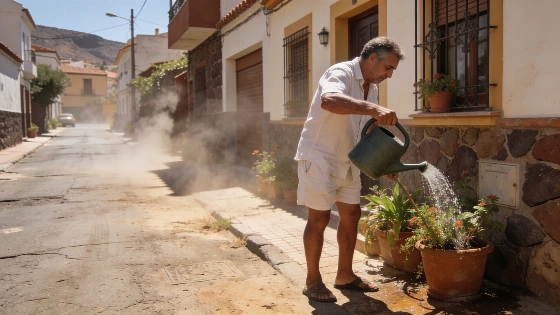
Residents are urged to take precautions: avoid direct sun exposure during peak hours, stay in cool or air-conditioned spaces, ventilate homes at night, wear light-colored clothing, drink water frequently, eat hydrating foods, and avoid alcohol and strenuous activity during the hottest periods. The General Directorate of Emergencies emphasizes the importance of these measures to prevent heat-related health issues and reduce fire risk.
This extreme weather event follows a pattern of increasingly frequent and severe heatwaves in Spain, as highlighted in recent coverage of temperature trends and rainfall uncertainty for August in the national weather outlook. The current episode underscores the vulnerability of the Canary Islands to both heat stress and wildfire hazards, especially during the summer months. Local authorities continue to monitor the situation and may extend restrictions if conditions do not improve.
For context, the Canary Islands’ unique geography—marked by mountainous terrain and microclimates—often leads to significant temperature variations across short distances. Heatwaves in the region can have serious implications for public health, agriculture, and tourism, sectors that are vital to the islands’ economy. The combination of high daytime and nighttime temperatures increases the risk of heat exhaustion, particularly among vulnerable populations. As climate patterns evolve, such extreme events are expected to become more common, making preparedness and rapid response measures increasingly critical for the region.