From September, the INSS will notify Canary Islands residents about sick leave and disability benefits exclusively online. Paper letters will become the exception. Missing a digital notification could have serious consequences.
Starting 1 September, the way the Instituto Nacional de la Seguridad Social (INSS) communicates with people in the Canary Islands about sick leave and disability benefits will change fundamentally. Notifications about temporary incapacity, permanent disability, and non-incapacitating injuries will now be delivered exclusively through the Social Security Electronic Office (SEDESS). This shift, introduced by Order ISM/541/2026, means that paper letters will largely disappear for these procedures, and affected residents must check their digital accounts for updates.
The change does not alter how medical leave is initially processed. When a doctor issues a sick note, the process for reporting it to Social Security and the employer remains unchanged. The key difference is in subsequent communications: decisions about ending sick leave, requests for additional documents, or rulings on benefit eligibility will now be posted online. According to the Organización de Consumidores y Usuarios (OCU), this new system will apply to anyone applying for or receiving temporary incapacity benefits, as well as those involved in permanent disability or injury claims.
Notifications will be available for ten calendar days in the SEDESS portal. If the recipient reads the message within this period, it is considered delivered at that moment. If not, the notification is deemed rejected after ten days, and the process continues regardless. This mechanism is already standard for electronic notifications in Social Security, but the expansion to medical leave cases raises the stakes: missing a notification could mean missing a deadline to appeal a decision, submit documents, or respond to a request. For short-term sick leave with no further action, the impact may be minimal, but for longer or more complex cases, the consequences could be significant.
To help users adapt, the INSS may send SMS or email alerts when a new notification is posted. However, these alerts are only informative; the official notification is the one in the SEDESS portal. Access requires digital identification, such as a digital certificate or Cl@ve credentials. The regulation stresses that not receiving an SMS or email does not invalidate the notification, so keeping contact details up to date is crucial, especially for those on extended sick leave or with ongoing disability claims.
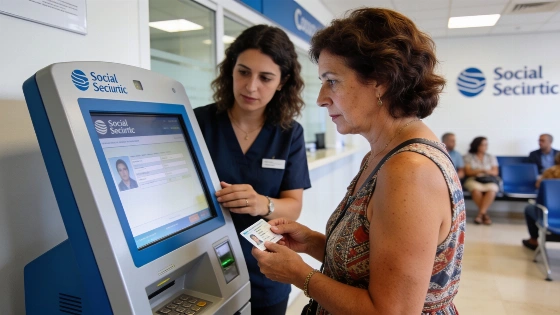
Paper communications will not disappear entirely. Exceptions remain for cases where the INSS lacks electronic contact details or when non-digital communication is needed to ensure administrative effectiveness. People who struggle with digital systems can get in-person help at Social Security Information and Assistance Centres (CAISS), where staff can access notifications on their behalf.
This move toward digital-only communication reflects a broader trend in Spanish public services, where electronic notifications are becoming the norm. The shift is intended to streamline processes and reduce delays, but it also places new responsibilities on citizens to monitor their digital accounts. In Madrid, for example, the growing reliance on digital systems has coincided with record waiting times for public health services, prompting some residents to seek private care, as reported in recent coverage of Madrid's healthcare challenges. For Canary Islands residents, the new notification rules mean that missing a digital message could have direct consequences for their benefits or employment status. The INSS recommends that anyone affected by these changes ensure their digital credentials are active and their contact information is current to avoid complications.
For context, Spain has been steadily expanding digital administration in recent years, with most tax, employment, and social security procedures now available online. The Cl@ve system, widely used for digital identification, is free to obtain and can be activated at local offices or online. While the move to digital notifications is designed to improve efficiency, it also highlights the digital divide: those without internet access or digital skills may face new barriers, despite the availability of in-person assistance. The INSS has stated that it will continue to provide support for those unable to use electronic systems, but the expectation is clear—digital communication is now the default for medical leave and disability benefits in the Canary Islands.