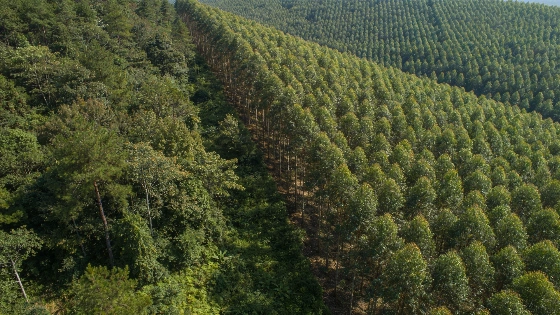
China’s record-breaking reforestation has transformed vast landscapes, but new research reveals that monoculture plantations near natural forests are fragmenting habitats and putting bird and pollinator populations at risk. The findings challenge assumptions about the benefits of large-scale tree planting.
China’s ambitious reforestation drive, which has added 28 million hectares of new trees since the 1990s, is now facing scrutiny after a major study revealed that the ecological impact is far more complex than previously thought. According to research published in April 2026 in Communications Earth & Environment, more than half of new plantations were established within one kilometer of existing natural forests, intensifying habitat fragmentation and raising concerns for wildlife.
The study, which analyzed changes between 1990 and 2020, found that while China’s total forested area has grown, the distinction between natural forests and planted monocultures is critical. In 60% to 64% of provinces and counties examined, fragmentation of natural forests increased, even as plantation fragmentation decreased. By 2020, over 1,000 counties had reached levels of fragmentation considered severe by the authors, up from 945 in 1990.
Monocultures and Hidden Risks
Researchers warn that simply counting trees does not equate to preserving natural forests. The expansion of plantations—often monocultures of fast-growing species like eucalyptus, bamboo, or Japanese cedar—has created new edges, isolated wildlife populations, and disrupted genetic exchange. While some government programs, such as the Natural Forest Protection Program, have helped slow fragmentation in targeted areas, the overall trend remains concerning.
The 2016 study that first raised alarms, published in Nature Communications, focused on the Grain for Green program, which restored nearly 28 million hectares by 2013 at a cost of $46.9 billion. Reviewing 258 publications and field data from 202 sites, researchers found that 82% of plantations were monocultures, with only a handful of sites reporting native forest. Mixed-species plantations were rare and typically included just two to five species.
Impact on Birds and Bees
Fieldwork in Sichuan province used birds and bees as indicators of ecosystem health. The results were stark: monoculture plantations supported bird diversity similar to or lower than agricultural land, while mixed forests offered a modest improvement. For bees, species richness dropped by up to 92% in plantations compared to cropland. Native forests consistently outperformed plantations, supporting far more bird and bee species. The lack of flowers and understory vegetation in monocultures was identified as a likely cause of the decline in pollinators.
Although mixed plantations improved bird diversity over monocultures, they still fell short of native forest levels. The findings echo concerns about other measures to protect native bees from invasive species, highlighting the complexity of managing biodiversity in changing landscapes.
Mixed Results and Policy Implications
Not all recent studies paint a negative picture. Research published in November 2025 modeled habitat suitability for 402 non-migratory forest bird species and found that nearly three-quarters expanded their suitable habitat between 2000 and 2020. Average species richness increased, and both protection and reforestation programs contributed to these gains. However, the authors cautioned that more species does not necessarily mean preserved ecological functions, and called for further studies on other animal groups.
Experts agree that protecting natural forests and promoting native species, diverse canopies, and mixed forestry practices are essential. Interviews with rural households showed that mixed forests provided similar economic returns to monocultures, suggesting that biodiversity-friendly approaches need not come at a financial cost.
Cases like the reforestation of holm oaks in Valencia—later cleared for solar panels—underscore the importance of forest permanence and composition, not just tree cover, in measuring biodiversity and resilience. As China’s experience shows, the quality and connectivity of forests matter as much as the quantity.