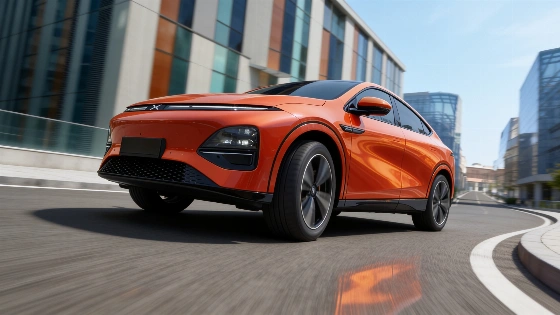
Chinese manufacturers are redefining electric mobility, launching vehicles that can travel over 1,700 km on a single charge. With solid-state batteries on the horizon, the industry is poised to surpass 2,000 km per charge, challenging global competitors.
Chinese automakers are rapidly transforming the electric vehicle landscape, introducing models that now exceed 1,700 kilometers of range on a single charge. This leap in autonomy is not just a technical milestone—it signals a strategic move to capture new markets, especially in Europe, where the balance of technology, features, and price has already made Chinese EVs increasingly attractive.
Unlike traditional plug-in hybrids, the latest wave of Chinese innovation centers on Extended Range Electric Vehicles (EREV). These vehicles bridge the gap between pure electric cars and hybrids by using a small gasoline engine solely as a generator to recharge the battery while driving. The propulsion remains fully electric, eliminating the dependency on combustion engines for movement and addressing one of the main concerns for EV buyers: range anxiety.
How EREV Technology Works
EREVs stand out by integrating larger battery packs—more akin to those found in pure electric vehicles than in plug-in hybrids. This design allows for substantial electric-only driving, while the onboard generator extends the total range far beyond what most competitors offer. For example, the BYD Seal 6 DM-i boasts a combined range of 1,505 kilometers, with 210 kilometers achievable without ever engaging the gasoline engine.
Xpeng has also made significant strides, with models like the Xpeng G7 EREV and G6 EREV reaching up to 1,700 kilometers of combined range, and the Xpeng X9 EREV delivering 1,600 kilometers thanks to a 63.3 kWh battery. These figures set new standards in the segment and highlight China's leadership in extended-range electric mobility.
This technological edge is not going unnoticed in Europe. As buyers weigh the limitations of plug-in hybrids against the promise of pure electrics, EREVs offer a compelling alternative—one that is already reshaping consumer expectations and market dynamics.
The Promise of Solid-State Batteries
Looking ahead, Chinese manufacturers are betting on solid-state battery technology to push the boundaries even further. Once commercialized, these batteries could enable vehicles to travel up to 2,000 kilometers on a single charge, according to figures based on the CLTC cycle, which is generally more optimistic than Europe's WLTP standard.
Industry giants like CATL are preparing to launch automotive-grade solid-state batteries before the decade's end, aiming to boost range, reduce charging times, and extend battery lifespan. Other major players—including BYD, SAIC, GAC, and Chery—are racing to develop batteries with energy densities as high as 600 Wh/kg, with Chery targeting over 2,000 kilometers per charge for its brands Omoda and Jaecoo.
Charging infrastructure is also evolving. BYD has already rolled out an ultra-fast charging network capable of delivering up to 1,500 kW, paired with its Blade Battery 2.0 technology. This combination promises to recharge a battery from 10% to 97% in just nine minutes, dramatically reducing downtime for drivers.
Global Impact and Context
These advances are not occurring in isolation. As the global automotive industry pivots toward electrification, the rapid progress of Chinese brands is forcing established players to accelerate their own innovation cycles. The shift is reminiscent of the transformation facing iconic models like the Mazda MX-5, which, as discussed in this analysis of the last gasoline-powered Miata, marks a broader industry move away from combustion engines.
For consumers, the practical implications are clear: range is becoming less of a barrier to EV adoption. If these technologies reach mass production, Chinese automakers will have played a decisive role in making long-distance electric travel a reality, setting new expectations for what electric cars can achieve.
Additional context: Solid-state batteries are widely regarded as the next major leap in EV technology, promising greater safety and energy density. While CLTC range figures tend to be higher than those certified under WLTP, the direction of progress is unmistakable. As European and global regulations tighten emissions standards, the competitive pressure from China is likely to accelerate the transition to electric mobility worldwide.