China has introduced uMR ShenGuan, a platform that promises to both read and influence brain activity using MRI technology. Despite bold claims of precision and speed, the system lacks clinical trials and independent validation, raising questions about its real-world impact.
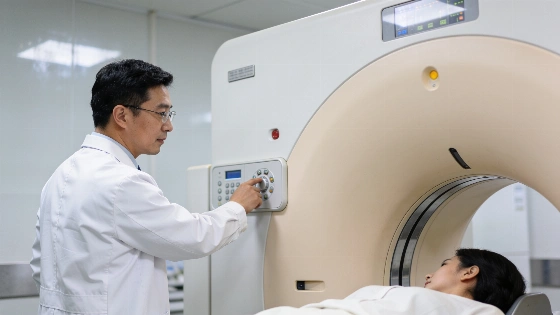
United Imaging and the University of Tianjin have introduced uMR ShenGuan, a brain-computer interface platform that uses MRI technology to monitor and influence neural activity. The launch took place in Tianjin before an audience of nearly 400 specialists. While the system is described as a step beyond traditional brain imaging, it has not yet undergone clinical trials or received regulatory approval. According to statements from Tianjin University and industry briefings, uMR ShenGuan is presented as the first fully MRI-based BCI solution for both research and clinical use, developed by Shanghai United Imaging Healthcare and Tianjin University.
Unlike standard MRI scanners that only capture static images, uMR ShenGuan is designed as a closed-loop system. It records brain signals, decodes them, applies targeted neuromodulation, and then measures the brain’s response. This setup aims to make MRI an active tool in brain research and, potentially, therapy. Reports from G-MedTech describe the platform as integrating signal acquisition, decoding, neuromodulation, and response assessment in a single workflow, which differs from typical MRI applications.
At the inaugural National Conference on MRI-Brain-Computer Interface, the launch of uMR ShenGuan was accompanied by the creation of an innovation alliance for MRI-based BCI, signaling a coordinated push for industry and academic collaboration in China.
The platform is built on the uMR family of MRI machines, which support field strengths of 3.0, 5.0, and 9.4 teslas. Since October 2025, teams from United Imaging and the University of Tianjin have worked on integrating signal acquisition, hardware adaptation, and image-guided neuromodulation. The system is intended for tracking changes related to brain plasticity, with plans for multicenter studies and standardized protocols involving universities, hospitals, and regulatory agencies. University news describes these efforts as part of a broader plan to create standardized BCI research platforms across China.
Developers claim the platform can achieve millisecond-level temporal resolution and sub-millimeter spatial accuracy. They also say it can compensate for magnetic field distortions caused by neural implants, which is a known challenge in MRI research. However, these claims are based only on internal data. The official release does not clarify whether the millisecond timing refers to MRI alone or to combined EEG-MRI setups, and there are no independent benchmarks or peer-reviewed studies. According to G-MedTech’s industry brief, there is no publication in a peer-reviewed journal, no independent benchmarking, and no clinical trial data available for uMR ShenGuan.
In practice, ‘reading and modulating’ the brain here does not mean accessing thoughts or memories. The system detects and decodes neural patterns linked to specific tasks or states, translating them into machine-readable instructions. The Chinese platform adds a feedback loop: after decoding, it delivers a targeted intervention and then measures the brain’s reaction, all within the same technical setup. Modulation refers to influencing neural circuits by applying a stimulus and observing the outcome through imaging and signal analysis, not controlling behavior.
Chinese regulatory authorities approved several BCI devices in August 2026, referencing an NMPA decision dated August 19. This regulatory shift indicates that China’s BCI market is rapidly moving from laboratory research to clinical application, although uMR ShenGuan itself has not yet received separate regulatory clearance or published clinical results.
Project leaders suggest possible uses in motor rehabilitation, neurological care, psychiatry, ophthalmology, and audiology. They also mention potential future applications in education, sports, gaming, sleep improvement, and industrial safety, but these remain speculative. The system has not been tested in patient trials, published peer-reviewed results, or received regulatory clearance. No hospitals or patient groups have been named, and there is no timeline for clinical rollout. According to university and industry sources, the main clinical targets include stroke and trauma rehabilitation, neurocritical care, and psychiatric interventions, with additional interest in sensory and cognitive areas.
For now, uMR ShenGuan is a research platform with ambitious claims but no independent validation. Its promise of real-time, high-precision brain modulation is notable, but until the developers provide clinical data and open their results to outside review, the technology remains unproven. China’s push in neurotechnology is clear, but credibility in this field will depend on transparency, reproducibility, and a willingness to meet global scientific standards.